Saturday, June 03, 2017

Right Angle

I have moved: 

This blog has shifted to GhoseSpot: www.ghosespot.com. Come visit me at my new home and also pass on the word to friends, please.

See you there,

Sandip

Monday, March 20, 2017

Shuttle Diplomacy


A good way to start the week is by contemplating on what we are set to achieve in the next 7 days. Conventional wisdom suggests it is best to focus on the positives and visualise the outcome we desire, much like that long drive in Golf, when we can picture the ball landing on the green after a perfect lift through the air. But as in Golf, so at work and life, it is smart to be mindful of the hazards that lie on the way. Anticipating potential obstacles are traits of achievers.

As leaders our only job is to help our teams succeed. In doing so, we empower them and also provide guidance and coaching. But, we largely leave them to fight their own battles. Surely, that is the recipe for personal growth and hardened by these struggles emerge the leaders of the future.

To read more Click here

Post UP 2017: "Bihar Model" is outdated; Opposition must find a new template


Article first published in @abplive.in  (Photo courtesy PTI via ABPNews)


It has been a week since the Assembly election results that stunned the nation came out. Politicians and media were shocked by the now seemingly unstoppable rise of Prime Minister Narendra Modi. While most people are still trying to gather their wits to formulate a response to the stupendous victory of the BJP, the discourse has been dominated by theories on the future of the Congress and Rahul Gandhi.

No doubt there has been discussion on the fate of the major losers, namely the Samajwadi Party, BSP and AAP. But, not much attention has been paid to the reactions of other regional leaders and what this mandate means for them.


To read more: Click here

Sunday, March 12, 2017

Assembly 2017 Results: Time to look ahead


Article first published at +ABP NEWS curated in Sandip Ghose' Blog: Right Angle click here

Let us stop flogging the dead horse of demonetisation and not settle scores among each other about who had predicted what outcome. Face it, we were all off the mark to a greater or lesser extent including most Exit Pollsters. It is all par for the course in a 7-phase election, which can be as tricky as an eighteen-hole Golf course.

Several myths and assumptions have been broken, but again we should not self-flagellate ourselves by blowing our own fallacies or fantasies, as the case might be. So, focus on some home truths and move forward.

Rahul Gandhi and Akhilesh Yadav wasted precious time and energy on bashing Notebandi, while Captain Amarinder Singh who royally ignored it came home swimmingly. There is no value in a post-mortem on whether any of the proclaimed benefits of demonetisation have been achieved. It is history and certainly will be a non-issue in the 2019 elections. By then, even Amartya Sen (long live the revered Bharat Ratna) would also have forgotten about it.

But, what is here to stay is increased digitisation of the economy, Aadhar and PAN tagging of transactions leading to, whether we like it or not, greater transparency and, hopefully, higher tax collection. GST is going to become a reality and with increased numbers in the Rajya Sabha the government will not have to take recourse to money bills for passing every single unpopular legislation. So, stop whining about ‘tax-terrorism’ and brace up for some more tough economic measures – such as on Benami Property and unaccounted Gold.

Businessmen and Corporates who have been waiting for their turn in 2019, when the political parties have to come to them for funds, should do well to take note that demonetisation did not affect elections either in UP or Maharashtra. Narendra Modi’s definition of “Acche Din” may not be the same as what they were used to during previous dispensations.

It is time for the opposition, still tormented by thoughts of the resounding drubbing of May 2014, to realise that lungpower and disruptions of Parliament will not translate into votes.

Second, Narendra Modi and Amit Shah have long internalised the theme of Tagore’s “Ekla Chalo Re” realising that going forward it is going to be BJP Vs the Rest all the way. Therefore, while Prashant Kishor may get richer by advising parties on how to beat the BJP and more Harvard Professors may make a bee-line for the booming electoral market of India, Shah-Modi have already moved the game at least two notches higher.

In UP, Narendra Modi has conclusively demonstrated how it is possible to cut across caste, communities, geography and socio-economic strata by creating a larger national agenda.

After Maharashtra and UP, it can be safely said that BJP will not have to seek out allies for 2019 (even in the South) instead regional parties will woe BJP in the hope of a couple of berths at the centre.

One may not have to wait for too long to see how ripples of Uttar Pradesh victory into neighbouring Bihar, where Nitish Kumar is already seeing to be warming up towards Modi being one of the few in the opposition to find merit in Demonetisation.

It would also be fascinating to watch how the heads of some of the regional empires, who were dreaming of being the consensus candidate or playing kingmaker in the event of a third front cobbling up majority in 2019, will recalibrate their ambitions and strategy.

It will be a psychologists delight to study how these results affect Arvind Kejriwal , who was already behaving as a shadow Prime Minister.

However, what can be said for sure is, unless bitten by an overwhelming urge for self-destruction, no party will ally with Congress as an equal partner at least as long as Rahul Gandhi is at the helm.

These elections would have also have broken the reverie of those who were romanticising about the entry of Priyanka Vadra into politics. Her brief guest appearance in the Gandhi pocket boroughs of Amethi and Rae Bareli would have made her fans realise she is at best a Goddess with feet of clay. And, if one were to accept her party seniors’ claims that she had played a pivotal role in managing the war-room for UP, it sadly shows that she is no better than her brother in shaping political strategy.

On the other hand Captain Amarinder Singh has proven that the Dynasty may be Dead (or dying) but long lives the Royalty. One need not belabour the point that Congress could never have won Punjab without him. Whether other minor royals in the Congress, like Jyotiraditya Scindia, will take a cue from him only time can tell.

Finally, it can be said that manufactured controversies can create social media stir and get a few stray headlines in the inside pages of international media but leave greater India, which has many more existential issues to cope with, untouched.

The left-liberal media and intelligentsia should accept this and desist from making themselves even more irrelevant by opposing every move of the government for the heck of it.

Similarly, smart quips and sound-bytes may sound nice in TV studios media and get pats in the crony circuit, but do not cut ice with the voters.

At the end of the day, if the arguments are not substantive, Patillas are just empty vessels that make noise, which has little use for Mrs Obama or even a humble desi homemaker.

Sunday, March 05, 2017

Watch out for Devendra Fadnavis, BJP's gen-next leader


Pic Courtesy +ABPLIVE 

This article was first published in +ABPLIVE

To read other published articles on politics by Sandip Ghose Click Here. His curated Blog: Right Angle has now shifted to www.sandipghose.com

Just when two forty-something scions of political dynasties are tripping over each other to promote themselves as youth icons, BJP has quietly gifted the country its own gen-next leader in Devendra Fadnavis.

Like in Uttar Pradesh now, if one recalls, the BJP had gone to polls in Maharashtra without a Chief Ministerial face. Even then, the strategy was a matter of intense debate and discussion. It was only towards the last lap of his campaigning, in Nagpur, that Narendra Modi had dropped a broad hint about Fadnavis being one of the probable names.

In fact, the triumvirate of Fadnavis, Khattar and Raghubar Das, all anointed as Chief Ministers within a gap of a few weeks towards the end of 2014, set some kind of a trend. They were all relatively unknown faces and somewhat surprise choices defying normal caste and region equations.
Of them, Fadnavis was more of an exception than others. Not only was Fadnavis younger than the rest, but he also did not have a strong constituency of his own to write home about. In a state like Maharashtra that boasts of being the commercial epicentre of the country money is a key determinant of political relevance. Therefore, even a first time young MLA like Pankaja Munde harboured ambition of becoming CM purely on the strength of inheriting her powerful father’s legacy. But, Fadnavis came from a modest background with a clean image and reputation of a sincere and dedicated ​party ​ worker. In some ways, he was a symbol of the industrious, educated, middle class Marathi ‘mulga’.

Putting Fadnavis at the helm in a large and complex state like Maharashtra was a huge gamble of Narendra Modi. His challenge was not only tackling a demanding and bickering partner like Shiv Sena but also managing heavy weights within his own party, which called for extra-ordinary maturity. Even though out of power and reduced almost to stubble, NCP and Congress in certain boroughs still remained forces to be reckoned with. It must be said to his credit that, Fadnavis navigated through the pitfalls and minefields with dexterity that is rare for a debutant.

One had observed signs of Fadnavis’ deft political management in the few by elections and local body polls over the last two years, but the recent BMC and Municipality Polls were undoubtedly his baptism by fire. While the BJP’s sweep of the rest of Maharashtra was less of a surprise for many, barring perhaps the traditional NCP stronghold of Pune, Pimpri-Chichwad, it was Mumbai that left everyone awestruck. It was truly a moment of Fadnavis coming of age.

But, if the results were stunning, the biggest statement of Fadnavis’ ascending stature was his magnanimous declaration of not contesting the mayoral position and offering outside support to Shiv Sena in forming the Brihan-Mumbai Municipal Council. At one stroke, he shed his “come lately” status to steal Uddhav Thackeray’s thunder and place himself on a higher pedestal. It was an unequivocal announcement that henceforth, Shiv Sena and other political parties have to deal with him on his own right and not as a surrogate of Modi and Amit Shah. The same message would have surely gone home also to his own senior colleagues and peers in the state BJP.

Maharashtra on a platter, just before the last lap of U P Elections, was the best return gift that Devendra Fadnavis could have given Narendra Modi for choosing him as the Chief Minister. But, in living up to the confidence reposed in him by​ ​ ​ Modi-Shah, Devendra Fadnavis has also started the generational shift in BJP that is required to reinvent the party and make it future ready.
This is a strong signal for other regional veterans who may have started taking their positions for granted, many of whom should start planning either for early superannuation or being bumped up to lofty but unimportant positions at the centre. In the event of BJP winning in Uttar Pradesh, which many are willing to bet upon today, it can be expected with reasonable certainty that Modi-Shah will spring another fresh face.

And, in the BJP ruled states that will go for polls in the coming two years, the incumbent Chief Ministers should not assume their indispensability. But, the challenge for Modi and Shah will be to find more like Fadnavis across the country, who will shape BJP 2.0 — that is more progressive and liberal. The young India, whom Modi has wooed so relentlessly, expects it of him. He can deliver on the promise only through a new breed of BJP leaders who shall walk the talk of governance, development and growth.

Originally published at www.abplive.in on March 5, 2017.

Thursday, March 02, 2017

Demonetisation in Retrospect


Pic Courtesy +Mint 


This Blog has moved to Right Angle: www.sandipghose.com. To read article Click here


What happens when “post truth” meets statistics?

One enters a new world of counter-factual spins.

So, now that the third-quarter GDP estimates indicate growth at a healthy 7%, tighten your seat belts and get ready for a new wave of economic sophistry on demonetisation.

This writer has neither claim nor pretence of being an economist. However, as a roving marketer he has travelled through several states since demonetisation was announced on 8 November.

Like every other Indian, he, too, had some views on note bandi—based not on erudite economic theory but observations and anecdotal conversations during field trips, which he had penned down from time to time.

After some initial hesitation most political parties, save some notable exceptions like Nitish Kumar’s Janata Dal (United), had jumped on to the bandwagon of demonising demonetisation. A couple of leaders among them, notably Mamata Banerjee and Mayawati, were particularly strident in their protest.

Economists across the spectrum lambasted the move, except a few sarkari ones who were seen to be beholden to the government of the day.

The first signs that demonetisation might have been over-flogged came with the Maharashtra civic polls. Similar, murmurs were probably also emanating from the Uttar Pradesh campaign trail, which saw a subtle shift in the discourse to traditional topics like caste and community with the mandatory Om Ganeshaye Namah mention of development.

Also read: What explains 7% GDP growth despite Modi’s demonetisation drive?

We have already started hearing, the cautionary “don’t count your chickens too soon; wait for the Q4 estimates” kind of counsel that could well turn out to be true. The analogy of a speeding car brought to a screeching halt by firing at its wheels has quickly changed into the explanation of momentum carrying the juggernaut through an extra quarter. There may be some merit in that argument too, but it still does not explain the paradox fully.

So, where is the disconnect between theory and reality?

First, as this writer has argued in the past, it was erroneous to judge demonetisation through the single lens of economics. There were multiple dimensions to the decision of demonetisation, even if some appeared to have been added as afterthoughts. Therefore, one needed to view through a prism of economic, political and governance objectives.

Second, one cannot paint the entire country with a single brushstroke seeing the queues outside ATMs in Delhi. There are not only differences in the economies of states, say between Uttar Pradesh and Maharashtra, but also the attitude of people. For example, the public reaction to dry ATMs in south India was very different from those in Kolkata.

Similarly, one found traders in “rurban” Rajasthan and Madhya Pradesh to early adapters of digital transactions than, understandably, in rural belts of Hindi-heartland.

Finally, the pundits and politicians in their eagerness to trash demonetisation, forgot to factor in the resilience of the average Indian, whose DNA has been engineered to cope with shortages and scarcities. Living with the vagaries of nature and whims of the masters, they are used to long periods of hardship due to natural calamities, such as poor monsoon or floods, or man-made crises created by hoarding or chronically inefficient public distribution system. For them, demonetisation would be only a small speck in memory.

While the government may be guilty of trying to retrofit logic to justify a decision that seemed to be on the verge of backfiring, politicians and analysts critical of the government be can be accused of selectively ignoring or debunking indicators such as statistics of rabi sowing or record car sales in January. There was also little mention of the bumper kharif crops after a good monsoon in most parts of the country.

One read about alleged retrenchment of staff by a certain private bank, but the record profits declared by the same bank in the third quarter did not receive the same attention, just as largescale hiring by one of their foreign peers expanding their operations in India.

As a roving salesman what one observed in the behaviour of the rural consumer was postponement of discretionary purchases that normally follow a good harvest. A sort of Giffen effect kicked in. The credit cycle increased in the villages with delay in realisation of crop sale as well payment for seed purchases. There was also a readjustment in buying patterns with a move towards small unit size packs for many products. But, hardly any peer group competitors in the field talked of more than a 10% shortfall in their sales targets.

What, of course, did not happen is much of the channel stock up that traditionally takes place in December in anticipation of a demand surge post winter. This was more than compensated by a pick up in January, but without the increase in prices that usually accompanies it. Therefore, those looking for speculative gains and stock profit were left disappointed.

Sectors like real estate have indeed suffered. That is because it was the largest playground for cash transactions. In sharp contrast, one did not see much contraction in infrastructure work except in poll-bound states.

It would be disingenuous to say the economy is hunky-dory just as it would be dishonest to make doomsday predictions. At the same time, there may not be a sharp “rebound” as many were expecting in the fourth quarter—simply because there was no major dip in third quarter. The real action will start in FY 2017-18.

An iconic Bengali satirist wrote a story of an astrologer, who predicted to a person who had come to see him that the stars would not be favourable till his age of 38. Excited, the client asked what happens after 38? Pat replied the astrologer, “After that you will get used to bad times”.

Whether people have gotten used to demonetisation or not, it is stale news and it’s time that our politicians and economists start to look ahead. The next two years indeed holds a lot of promise and interesting possibilities for the Indian economy. With goods and services tax on the horizon and a thrust on infrastructure spend in the last lap of Modi government, we must make the most of it instead of being stuck in a chronic desi malady of naysaying.

Friday, February 03, 2017

Twin Blog: Economic Survey and Budget 2017

My twin blogs published in +ABPLIVE on 

Economic Survey : http://www.sandipghose.com/right-angle/2017/2/3/salvation-lies-in-infra-and-welfare-spending


Budget : http://www.sandipghose.com/right-angle/2017/2/3/modi-stays-the-course-pushes-strategic-reforms

Please do read and share.

Once again reminding you  Right Angle now has a new address: www.sandipghose.com

Please note the change and subscribe to the feed.


Also please share with friends and your Contact Circles.

Thanks for support over all these years (16 years of blogging since 2001 January)

Best regards,

Sandip

Sunday, January 29, 2017

Turn Right


This Blog has migrated to RIGHT ANGLE - Please follow and share with friends. See you at Right Angle And thanks for visiting.

Happy New Year and Cheers,

Sandip

www.sandipghose.com

Wednesday, December 28, 2016

Aam-aadmi and Demonetisation

Latest Blogpost: 

The aam-aadmi must be rewarded for their travails and support of #DeMonetisation by lower taxes, interest rates and social security schemes:

Read at: Right Angle by Clicking Here:

Thursday, December 01, 2016

My new address:

This blog has now shifted to: Right Angle. Please visit my new website under construction and send me your feedback Click here.

Many thanks for being such loyal readers. Looking forward to seeing you often in my new home.

Cheers,

Sandip

Wednesday, November 02, 2016

Arnab Goswami - the meteoric rise of a media outsider

Photo: +The News Minute 


Article first published in +The News Minute Click here


Arnab is a rare media personality, who from being a news anchor has transcended the professional "Lakshman Rekha" to become news himself. Much of that has been the contribution of his former colleagues, who first turned rivals and finally adversaries - trolling him relentlessly. Though Arnab too studied in Delhi (Hindu not Stephen’s) and also went to Oxford as some of his celebrity contemporaries, not being a Delhi or Mumbai boy (coming from Assam) he was not considered part of the inner circle. At NDTV - the alma mater of so many news TV stars - he was always under the shadow of not only Barkha and Rajdeep but also the next rung of starlets and wannabe stars.

When Arnab moved out of NDTV, no one took either him or Times Now seriously. The battle ahead was expected to be primarily between NDTV and TV18 CNN-IBN. The unconventional decision to have a news channel out of Mumbai, instead of Delhi, which was the place of action, was itself frowned upon. The initial years were trying for Arnab (as has been chronicled at fair length in a number of hatchet jobs in other publications) and there were rumours of the Jains even starting to look out for his replacement at one stage. Finally, he found his mojo in The Newshour and the rest is now history.

Arnab not only became his competitors envy, even those who criticised him clandestinely watched his show. The only other parallel in Indian media this columnist can think of is the Bengali Daily - Anandabazar Patrika - that everyone trashes but loves to read. This gave rise to the advertising slogan - "what does Anandabazar have to say (on a topic)?" Similarly, no matter how much people dissed Arnab and The Newshour, even his most vocal detractors were keen to know his position on key issues of the day. Often, Arnab was the one who set the agenda for others.

Another distinctive style of Arnab was that he preferred to be the quintessential Anchor and Editor instead of an Anchor-Reporter, which is more common in television journalism. Therefore, Arnab did not step out of the studio except for his face-to-face Frankly Speaking interviews. Also, being stuck before the camera, practically 365 nights of the year, he had little time for schmoozing in the capital's power circuit. So, he continued to remain the "outsider". Distance gave him an enigmatic and maverick image, which he seemed to enjoy.

In many ways, Arnab changed the paradigm of Indian news television. Contrary to popular perception, while he was not afraid of taking positions on issues, he did not bring personal bias or prejudice against individuals on his shows. This is more than what one can say about many of his peers. He provoked and intimidated - in an adversarial mode of anchoring - to bring out the counter point of view but never tried to surreptitiously sneak in political or personal agenda. I am inclined to believe he is politically agnostic and much of his posturing is for effect (On the few occasions, I have met Arnab socially, found him to be soft-spoken and polite to a fault).

To many who had followed his meteoric rise - the question was not whether he will ever leave Times Now, but when. It is humanly impossible to maintain that maniacal pace and tenacity month after month. One has seldom seen him take breaks and a few times he has even returned cutting short his leave if there was an important news-break. He had clearly peaked at his game and from hereon it could only be a plateau at best till youngsters displaced him from the top slot. There were already his clones copying The Newshour format to create a poor man's Times Now. While others after trying to put him down - with snide asides (example "You don't have to shout to be heard") went back to their old ways of slanted journalism.

Clearly Arnab had to reinvent himself. But, it is doubtful if he could have done it at Times Now. If he stayed on forever - his core audience and fans would expect more of the same from him - which would be a recipe for professional disaster. Now, if he makes a fresh start he has a better chance of creating something new for himself. The best part of that will be, this time around he shall own "the brand" not someone else.

For the Jains too, it will be a good opportunity to get off the Tiger that they had inadvertently mounted. They can now get fresh talent and also relaunch the product in a new avatar - something that BCCL is particularly good at. One would not be surprised if they make it into a newsroom-based channel rather than an anchor-dependent channel (just as they have done for their print and digital publications). It will be a "win-win" for both.

I for one do not subscribe to the theory that Arnab has resigned due to differences on editorial policy. Knowing how commercially driven the BCCL group is, TRP is what would matter to them most. However, being independent will certainly give Arnab much more room for play. It is also possible that over the past few months Arnab was raising his jingoistic pitch and displaying an incipient right-wing inclination as a build up for his next jump. But, I am willing to bet Arnab and the Jains would part as friends without rancour.

Finally, it was amusing to note that some Times Now staffers actually cried after he made the announcement. This is somewhat at variance to the impression outside that Arnab is a monster of a boss who everyone loved to hate.

Monday, October 31, 2016

Why ain't anyone talking of Governance and the Small Shareholder in the Tata-Mistry saga

Photo Courtesy +ABPLIVE 

Article first published in +ABPLIVE (Click here)

The Cyrus Mistry saga has been done to death. Normally, fatigue would have set in among both the media and the public. As someone remarked, it does not even have any gossip value like, say, the sacking of the chairman of a liquor company. But the aftershocks of the sacking are still continuing.

Though the epicentre of this quake was Bombay House, the headquarters of Tata Sons, it has shaken entire corporate India and the tremors were also felt in the capital’s corridors of power, especially the Finance and Corporate Affairs Ministry and, some suspect, even the PMO. Per public perception, the Tatas were considered the gold standard among Indian business conglomerates. Now some fundamental questions have been raised about corporate governance in India.

First, on a positive note, it establishes the supremacy of the board. But, at the same time it also makes it loud and clear that in the final analysis the promoters are the ones who call the shots.

Having conducted a silent board room coup the Tata PR machinery went on an overdrive. In a rather intriguing move, they had a slew of top gun lawyers defend their action on television with a series of “exclusive” interviews rather than waiting their turn in court. This was probably triggered by rumours of Cyrus Mistry contemplating legal action (given that Mistry’s father-in-law Iqbal Chagla, son of the famous MC Chagla, is a renowned and respected legal luminary) which also explains the rush to file caveats in courts. But, it was a rather curious way of addressing stakeholder concerns — especially the stock market where the Tata stocks tanked.

In contrast, Mistry’s reactions were both restrained and dignified. Other than what is being popularly called his “letter bomb” (it is not known for certain who leaked the contents) he has not made any public utterances. In fact, his office went out of its way to scotch rumours of potential legal action.

Returning to the root, none can deny the Board’s prerogative to sack or appoint a Chairman. The rest is surround sound. Mistry certainly knows this and it would be surprising if he chooses to pursue a protracted legal tussle that will be a drain on resources and time. He wanted to have his side of the story to be known and has more than achieved that objective through his letter that mysteriously found its way into the public domain. Notwithstanding their self-righteous fulminations, it has clearly put the Tatas on the back foot with a lot of explaining to do and simultaneously put the onus on the Government, tax and regulatory authorities to investigate the charges.

The real battle, however, lies in the Board Room. It should not be forgotten that at the end of the day Mistry represented the interests of Shapoorji-Pallonji who hold 18.6 per cent of Tata Sons’ shareholding. The Trusts, no matter how powerful they are, cannot steam roll over the interests of minority shareholders.

In many off-line conversations it has been remarked that one of the cardinal sins of Mistry was not keeping the Tata Trusts informed of his moves on divestments and acquisitions. A fundamental question that one has not heard being asked is about the legal propriety of sharing “price sensitive” information with majority shareholders. If the Trusts are expected to be kept informed, what about the public shareholders of the concerned companies who are directly affected by these decisions? This is where the ‘Corporate Veil’ has been sharply pierced. It remains to be seen what view Shapoorji-Pallonji takes on similar situations in the Tata Sons board going forward.

At one level it will test the corporate governance framework in the country, in which the role of independent directors will also come under a spotlight. The obligation of the board is not limited to just the promoters and shareholders, but also the larger universe of external stakeholders. It is for this unrepresented constituency the independent directors are expected to act as conscience keepers. But how far the average director is either inclined or equipped to discharge such responsibilities is a matter of debate.

Till the time of writing Mistry has not been dislodged from his position in the Tata flagship companies which were either affected by his decisions or might be impacted by the contingent liabilities that he has highlighted in his letter. Will the ordinary shareholders who had elected Mistry as the Chairman of their companies go along without a whimper if the respective Boards recommend his early separation? If the Tatas try to bulldoze their way through, it will be another travesty of corporate democracy.

It will be interesting to see if after all this corporate paper shredding, what kind of external talent the Tatas are able to attract to replace Mistry. Many are betting that they will have to settle for an “insider-outsider” like TCS’s N Chandrasekaran. If there is even a grain of truth in Mistry’s allegations, the task of his successor is already cut out. It will be a miracle if he/she is able to achieve the turnaround painlessly.

Meanwhile, the coming weeks will be a test of credibility between Cyrus Mistry and Ratan Tata. If one were to treat the initial stock market reaction as an ‘Opinion Poll’, the Tatas have reasons to worry.

Tuesday, October 25, 2016

The Curious Case of Bombay House


Picture from Internet
Article first published in +DailyO India Today

When Ratan Tata talked of “intolerance” rising in the country — at the Founder’s Day function of a public school — he was certainly not referring to what was brewing in the corporate empire that he presided over till a few years ago.

Even in hindsight — it could not have been a diversionary tactic. As the media went on an overdrive trying to interpret the political import of a generally apolitical Tata’s statement and was busy reporting the feud in the ruling political family of Uttar Pradesh , the young chairman of Tata Sons, appointed less than five years back with much fanfare, was removed unceremoniously in a bloodless boardroom coup.

Cyrus Mistry can enjoy quiet meals in dhabas with his chauffeur without the paparazzi chasing him.
Not much is known — or will probably come to light in a hurry — as to what might have preceded such a momentous decision by one of India’s largest (and arguably, the most well known, internationally) business conglomerate, though theories and conjectures are bound to surface.

However, from a lay external observer’s view, the following come across as interesting:

- The move obviously took Cyrus Mistry by surprise just as it apparently caught corporate India and the financial press unawares.
- If there were performance issues , they would have come to the table at board meetings and in a highly porous corporate culture of this country, there would certainly have been a whiff in the air;
- Over the years, despite having started on a tentative note, Ratan Tata had acquired a larger-than-life image and he not only remained the public face of the group, his personality undoubtedly held sway in the Tata empire not just because of his surname;
- While the internal Directors would have easily fallen in line with the group’s thinking, it would have required some very compelling reasons to convince the eminent external directors on the board;
- All things said, Mistry was the nominee of the largest shareholder of the Group (Shapoorji-Pallonji). For the Independent Directors to endorse such an extreme action, there must have been some overriding “ethical” (not necessarily integrity but “governance” related such as “conflict of interest”) considerations; it would be unfair to assume they would have gone along with the majority view.
- In a somewhat intriguing move, it seems Ratan Tata wrote to the Prime Minister apprising him of the Board’s decision. Whether the change of guard in a major corporate house merits such an intimation can be a matter of debate;
- Any shareholder tussle would normally be thrashed out first at a different fora before coming up to the Board — which is normally the place for stakeholders’ dispute resolution;
- Surely, the Tatas would have been alive to the possibilities of legal fall-out, especially with Mistry’s father-in-law being one of the very eminent jurists of India — Iqbal Chagla, son of the legendary MC Chagla. Not surprisingly, there is already talk of Mistry approaching the Bombay High Court for relief;

That brings us to a new development in Corporate India — when aggrieved senior executives are increasingly taking their former employers to court. This can be attributed to a number of factors.
First, high-stake CXO appointments are now stitched with elaborate legal contracts with severance conditions explicitly spelt out. With multi-million paycheques, head honchos are easily able to pay for expensive legal help that their poor predecessors could not afford. In an increasingly litigious society, law firms too are much more willing to take briefs against potential corporate clients.

Mistry’s appointment was prefaced with a much publicised “global search” by an international head-hunting firm stretching over two years. Finally, when Mistry — the scion of the largest shareholder — was brought in from the cold, many felt it was an elaborate charade. Now, that again a “hunt” has been insituted — one wonders what surprise it will throw up this time.

Finally, leadership transition in professional organisations is as prone to withdrawal afflictions as indeed it is in family-owned enterprises. And, it does not help to have a charismatic predecessor keeping a benevolent eye over one’s shoulders.

No matter how the drama plays out in the coming weeks — Mistry can enjoy quiet meals in dhabas with his chauffeur without the paparazzi chasing him.

But, the question people are asking is whether this was Tata Sons’ Samajwadi Party moment — and who is the Amar Singh in Bombay House?

Friday, October 21, 2016

WILL AKHILESH BE BOLD ENOUGH TO BREAK FREE?

PTI Pic Courtesy +ABPLIVE 

Article first published in +ABPLIVE Click here to read

The lay voter in Uttar Pradesh is flummoxed by the recent developments in the Samajwadi Party. The Yadav Parivar drama has all the elements of a feudal fight and struggle for control in a family-owned enterprise.

First, they are at a loss to figure out where it will all end. Will a settlement and truce be worked out in the larger interest of the family after a good deal of brinkmanship? Or are the cracks too deep to be repaired in a hurry?

While some subscribe to the theory of an elaborate drama (or “Nura Kushti”) being played out in several acts, others are speculating on possible scenarios of Akhilesh Yadav breaking free and returning with the support of the Congress or aligning with the BJP.

Second, what will be the political fallout of these differences? Will a chunk of the Samajwadi Party’s traditional Muslim vote-bank move away to the BSP to give Mayawati an edge?

With the strong possibility of a February election being announced immediately after Diwali, these are questions dominating chai and paan shop conversations in Lucknow.

Simple arithmetic would tend to indicate any division in the Muslim votes will go to the BJP’s advantage. Adding to that the spike in nationalist sentiments after the “surgical strikes” and the soft revival of Ayodhya, one is able to explain the BJP’s improved score in the latest opinion polls.
But electoral reality is seldom so straightforward and in Uttar Pradesh the triggers of mood swing can be many between now and February to change the equations. Far too much is at stake for any party to allow another a walk-over.

In all this the most interesting phenomenon is the evolution of AkhileshYadav as a leader in his own right coming out of his father’s shadow. When Akhilesh was anointed Chief Minister five years ago, people thought it to be another dynastic succession. But pretty soon Mulayam Songh Yadav made it clear that he was nowhere close to retiring to “Vanaprastha” or playing the role of Bhishma.
At the same time, Akhilesh asserted his mind to show that he was no proxy or puppet of his father. Almost from the word go the dynamic tension between father and son surfaced for all to see. There were occasional flashpoint in the equation which were contained even if they continued to simmer underneath.

Akhilesh started on a slightly disappointing note. He was unable to at once live up to the promise he had shown as an educated young politician of the next generation. There was a visible slide in law and order and development did not take off as expected. People feared a return to the old unruly Samajwadi era. Then came the setback of the 2014 Lok Sabha election and signs of anti-incumbency began to show.

Akhilesh was smart to pick up the signals early and in 2015 he shifted gear to speed up visible progress with his “Ummeed-o ki Pradesh” campaign. It would appear that he took the challenge manfully.

Successive by-elections showed the sheen had began to wear off the BJP and being a divided house they were yet to get the act together in Uttar Pradesh. He, therefore, began to prepare for a return on a positive mandate based on performance and delivery.

However, the hard-core and the pragmatic elements were not so convinced about Akhilesh’s strategy. In a way, it was a “no win” situation for them. If Akhilesh came out on top on the sheer strength of his self-built charisma, it would mean further marginalisation of the old guard. If he lost, that might put them in the wilderness for a long time to come.

With the almost certain polarisation of the Hindu votes in favour of the BJP (along with some Shia and OBC support) Mulayam could not afford to splinter his core base of Muslims and Yadavs. That would be an irrecoverable loss. Besides, both the manpower and the resources to fight the election are still controlled by the veterans like Shivpal Yadav. So, there is no way he can afford to alienate them.

The choice before Akhilesh is stark: Whether to accept his earlier position of being the “face” of the Samajwadi Party and continue in a relation of uneasy calm with the patriarch and the uncle. If he settles for that the threat of the younger Yuvraj being propped up to dethrone him will continue to haunt him.

The alternative is the bold and honourable option of setting out on his own and consolidating his personal political equity for the longer run, even if it means biding his time in the opposition for one term. He has age on his side to take that route. It would be a pity, both for Uttar Pradesh and Indian politics, if he does not.

Tags: #akhilesh yadav #BJP #Congress #mulayam singh yadav s#amajwadi party #shivpal yadav #uttar pradesh

Wednesday, October 12, 2016

All that is wrong with modern Durga Puja in Bengal


DURGA PUJA IS TACKY COMMERCE IN TODAY'S BENGAL


Photo Courtesy +ABPLIVE 
Article first published in +ABPLIVE Click here to read

Durga Puja in Kolkata depresses me. I am probably an odd Bengali, but for me present day Puja celebrations reflect much that is wrong with the State.

As children we used to look forward to the Pujas which were a right blend of festivity and solemnity. Today, it is a circus. But, it is not nostalgia alone that makes me sad.

Not that Bengalis, contrary to popular perception, are an overly religious lot, but mega “Theme Pujas”, as they are now called, have wiped out all traces of piety and spirituality from the celebrations.

As corporates jostle with awards, the para Pujas compete with one another on opulence and scale. There lies the rub.

Earlier a few big Barowari Pujas were linked with some local councillor, MLA or the odd goon (like Phata Keshto’s Kali Puja). Today Ministers freely flaunt their association on large billboards, thus setting in motion a battle of one-upmanship: “my Puja is bigger than yours”.

So far so good, as we Bengalis say. But, where does this money, running into crores of rupees that some of the top puja committees are known to spend, come from?

With the busting of chit funds, the traditional sources of funds have dried up and one no longer sees the old familiar names of sponsors. Now the milch cows are the ubiquitous ‘promoters and developers’ who cannot possibly operate without the blessings of the local ‘bosses’.

Alas, liquidating old ancestral homes is the last resort of the ‘bhadralok’ Bengalis with unemployed or under-employed children (unless they have already left the State in search of jobs) with dwindling resource. As the old gentry gets pushed away to the suburbs, leaving prime localities, trading communities, earlier living in chawl-like tenements in Burrabazar, move into the new high-rises that are coming up on their properties.

However, these new residents, who are not particularly interested in traditional Puja, are known to be more generous with their chanda (paying as per a separate ‘rate card’ as it were), thus contributing to the pomp and glitz of the pandals. Ordinary Bengalis today have to depend on commercial interests to underwrite their most important socio-religious festival.

Some years ago I did try some ‘pandal hopping’ or ‘thakur dekha’, to use the local phrase. While the Pujas had grown in affluence, the surroundings around them were pathetic. Nothing has changed in the last 40 years. There are the same make-shift food stalls selling rolls, chow-mien or other items that, in my view, should carry a statutory notice “Jaundice guaranteed, Typhoid optional” — such are the appalling standards of hygiene.

There are no public conveniences or hardly any provisions for emergency services. The entire city takes a mofussil look or that of a massive village fair where the masses descend to blow away their year’s savings (sometimes dipping into the domestic chest kept for rainy days, borrowing money or even selling family jewels in some cases) to buy five days of enjoyment for the family.

Durga Puja has been reduced to a form of escapism for the common Bengalis who have little left to celebrate or look forward to in life. I suspect the politicians know this and, therefore, play up the carnival spirit.

There is a specious logic about redistribution of wealth (which itself is highly questionable) as there is no real wealth creation happening in West Bengal. Similarly, one hears of how the Pujas are a boon to the artists and craftsmen of the State. There may be some truth in that, but that is nullified when one reads about the abject condition of artisans in Kumartuli, many of whom survive on orders from outside Bengal and overseas.

The celebrated Bengali writer Sankar had written some years back that the real planning for Durga Puja actually happens in the commercial centres in other parts of the country, where they gear up for the Puja business in Bengal. One could add Bombay to the list as one sees advertisements of leading brands with photo-shopped images of leading stars and models in Bengali attire.

Similarly, tourist destinations popular with Bengali budget travellers, like Nainital, Himachal Pradesh, Puri, Goa and now Kerala, Madhya Pradesh etc, gear up for their ‘Bengali Season’ between Dussehra and Diwali. Yesteryear’s film actors from Bollywood, well past their sell by dates, look forward to paid junkets to Kolkata for inaugurating Pujas for an appearance fee to add to the glamour quotient.

For me the true celebrations will be when there is Economic Resurgence, which may also see a new cultural renaissance for the State and a real intrinsic rather than just artistic evolution of Durga Puja. Till then I have no mind to settle for chalk in place of cheese.

Tuesday, October 11, 2016

PV Narasimha Rao - PM of Destiny

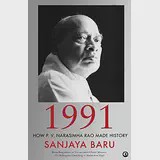
Just finished reading Sanjaya Baru’s new book — on 1991 and P V Narasimha Rao. (Article first published in +Medium click here to read)


In an increasingly polarised (and biased) world of journalism — Baru is from a fast vanishing tribe, who are able to keep facts separate from opinions and loyalties. He is one of the remaining few — who believe in research and corroboration through reading and interviews and do not pass off anecdotal evidence (read gossip) as “inside knowledge”.

Being an economic journalist and a seasoned political observer — Baru was particularly well placed to write this book that is as much about Narasimha Rao as it is regarding the economic watershed in India’s post-independence history. 1991 could have been a turning point for Indian politics as well had the Dynasty not struck back with vengeance — reducing PVNR from a man of destiny to a footnote in history.

It is divine retribution, perhaps, that after 25 years — there is a reassessment of his contribution restoring in small measure his rightful place as one who has significantly steered the country onto a new trajectory despite odds.

I have already tweeted a lot of snippets from the book as I was reading it. It is a serious chronicle of a very important period that may not interest a lay reader looking for juicy tidbits of the PVNR years. Therefore, it may not become a best-seller like his previous book The Accidental Prime Minister — which had a lot of ‘masala’ as it were. But, this is serious stuff for the archives.

Finally — the question that I was left with when I put down the book — was a counter-factual one: Where would India have been today — if it did not have the Nehru — Gandhi Dynasty ruling it (directly or via proxy) for the better part of 70 years ? My simplistic conjecture in hindsight are as follows:

If Patel or someone other than Nehru had become the first Prime Minister — it is most likely he would have still followed the Soviet model of Planned Development with a dominance of Public Sector, while paying lip service to the concept of Mixed Economy. But, where they would have most likely differed is on Nehru’s policy on Kashmir and China and probably not made the same mistakes.

Besides, we would have seen stricter enforcement of both economic legislation as well as general law and order in the country — arguably with lesser corruption. Most importantly — as PM they would have been the “first among equals” and not created a cult like Nehru — to lay the seeds of four generations of Dynastic Rule to follow.

One common thread in Baru’s recent works — are two Congress Prime Ministers, who achieved whatever they did despite the Gandhi family (specifically Sonia Gandhi)’s shadow.

There is little reason to believe — if Lal Bahadur Shastri could take Pakistan head-on in 1965 — someone else in his place would not have acted similar to what Indira Gandhi did in 1971. Also, probably, there would not have been the Emergency of 1975.

Going by Baru’s account — the country would have been better off economically if guided by professional economists and not suffered from the compromises of populist policies for the survival of a single family.

Finally, just to please the Left Libs on my time-line, it might have prevented the Hindutva backlash and, therefore, the rise of a Narendra Modi.

#SanjayaBaru #PVNarasimhaRao #SoniaGandhi #NarendraModi

Tuesday, October 04, 2016

Is trust over-rated at the workplace ?

Trust begins with one's own self


Pic from Net


Article first published in +Medium Click here


Trust as a function of leadership — is a current flavour of the season. It is not really a new concept or discovery. But, as in life so in organisations ideas keep coming back. There is, probably, a larger existential reason for it. Over time – values wither to a point of being dysfunctional – that is when nature’s own correction mechanism sets in to restore balance.
Corporate culture was never selfless. Dog eat dog is an old adage. Far from eschewing canine meat in favour of healthier alternatives — the pressures of quarterly results and investors breathing hot air through the ducts of the Boardroom have made organisations more ruthless. Consequently. – professional shelf-lives are shrinking putting ambitious youngsters on an overdrive. In an age of fitness mania – the proverbial rat-race has changed into a sprint up the stairs of a high-rise. In their frenetic rush to reach the sky – there is little time to cultivate deeper personal values for most. Andy Grove of Intel wrote “only the paranoid survive”. Doubt if by that he meant personal paranoia and insecurity — which frequently manifest among today’s C-suite executives.
The result of course is not difficult to predict – fast burn-outs, messed up personal lives and relationships, psycho-somatic ailments and personality disorders. The bottle, sedatives and in some cases substance of abuse (read drugs) are just an arm’s length away. Along the way it wrecks havoc in organisations and families.

So, where does trust come in all this ?


Pic from Net
Was chatting with an old friend and once colleague — who is hanging up his boots from active corporate life after fairly long and illustrious career — that took him quite close to the corner office but not inside one. Since this was a day after his farewell he was in a somewhat reflective mood. In the past 30 years our professional paths had crossed a few times and we did travel together as co-farers on the some stretched of the lonely road. Therefore, we had several data-points to exchange.
We talked of leaders we both admired and even those we did not — despite, in some cases, their truly outstanding successes. We also discussed colleagues — some who had moved ahead and others who were left behind or remained stuck. He shared a few recent snippets — that left me a trifle disturbed as it briefly shattered the image I had of some people. That led me to ponder over worlds like trust, betrayal, loyalty and gratitude.

Here are a few jottings in no particular order of importance:


  1. Trust is what everyone expects from people but not many are able to place it on others;
  2. Both developing trust and feeling the need to trust (others) comes with age and (life) experience; As we grow older — the illusions of invincibility get toned down and we become aware not just of our limitations but also — albeit at a sub conscious level — mortality. But, those with higher Emotional Intelligence tend to mature faster and realise that these softer human values are the true and enduring differentiators of leadership.
  3. Like most human traits — trust is part nature and part nurture. It is important to strike a balance between the two. Sometimes nature has to be corrected or compensated by nurture;
  4. Don’t be naive; But, don’t be cynical either. And, certainly don’t become bitter if let down or betrayed by someone you trusted;
  5. Do not expect anything in return from trusting people; Most importantly do not look for loyalty from people you trust. People are loyal to their needs and not to individuals;
  6. The rewards of trust does not come by way of gratitude or even accomplishment — but through internal growth that takes one to the next level of self-actualisation;
  7. Not everyone can bear the burden of gratitude; Being grateful requires genuine strength of character — to accept one’s own vulnerability and weakness which is not easy;
  8. Remember the number of times others have trusted you unilaterally; how that made you feel and how it shaped your attitude towards them; How often did you go back to thank them?
  9. Trust is not weakness it is means strength; It is about taking risks, making mistakes and preparedness to accept failure (for trusting the wrong person); That is the hall mark of true leaders — that sets apart the stars in a crowd of wannabes and losers.
  10. Never look back — if you trust someone and he/she has delivered say ‘thank you’ and move on.; if they have failed to deliver despite best efforts — say thank you all the more and if they have betrayed or let you down — buy them a drink as in the process made you wiser and a better human being;

Finally, trust is all about us. Before trusting others we must learn to love and trust our own self. Once we are able to do that — the rest becomes easy. Does not matter if those you once trusted think you are hallucinating — because the joke will then be on them.

#Trust #Leadership #Gratitude #Coaching #Psychology

Saturday, October 01, 2016

Uri and after

PAY BACK PAKISTAN WITH INTEREST, BUT NOT IN RUPEES


Picture Courtesy +ABPLIVE via AFP

Article first published in +ABPLIVE (Click here)

It has been ten days since the Uri Attacks and much water – and thankfully not blood – has flown down the Indus since then. The Prime Minister made a telling speech in Kozhikode and Sushma Swaraj, arguably one of the most articulate and effective External Affairs Minister India has had in recent times, was nuanced yet firm in her statement at the United Nations General Assembly.

Love him or hate him, if there is one thing politicians can learn from Narendra Modi it is how to chose his own time and place for response without getting bullied into premature reactions. If Manmohan Singh’s silences were called deafening, in contrast Modi’s deferred responses are calibrated for impact.


Discussing war room strategies and counter-terrorism options in television studios may be good for TRP, but that is not where or how the national security agenda is decided. In fact, intelligently used, public debates can be useful decoys for diverting public attention from real work that happens behind closed doors. It also helps in dissipating public angst, jingoistic rants and motivated criticism while the Government gets on with its job.

Only the uninitiated or those motivated to mislead would peddle the thought that the Government is blind to its own lapses and will not be subjecting itself (which includes the military and intelligence establishments) to critical scrutiny after such a major setback. Indeed, there is bound to be a major reappraisal of policy. But, it would be fanciful to expect public consultation on its security and intelligence report card.

Thus after a week more or less everyone realises that declaring ‘war’ with a politically unstable and militarily irresponsible nuclear neighbour cannot be the first course of action. While covert retaliation may be considered, on the surface diplomatic isolation and raising the international ante against the terror credentials of Pakistan are, perhaps, the most pragmatic way forward.

Prime Minister Modi threw the symbolic gauntlet of “war against poverty” to Pakistan at his party’s Kozhikode conclave. Though it may have sounded like glib rhetoric to change the discourse, there was a deeper political thought beneath the Modi’s fervent plea.

By all accounts after a bountiful monsoon and massive infrastructural spends ready on a platter the economy is poised for take off. This is precisely the moment when many detractors within and outside the country will try to derail the Government’s agenda. Frittering away an opportunity of a lifetime that could potentially place India at the high table of world commerce by a military adventure is not a trap that anyone can expect Modi to fall for.

Much is written and talked about India’s over-estimation of its own clout in the global geo-political arena. If we are being taken more seriously than before by the international powers it is largely because of our growing importance in world trade. Who will understand that better than a Gujarati?

Comparisons are drawn with how America’s resident Jewish population influences its policy towards Israel. It will be some time before Indian expatriates start wielding similar sway in the US Congress but that NRIs are a rising force is there for everyone to see. Therefore, it is not without reason that Modi has been wooing them so assiduously since becoming Prime Minister.

War would have been a tempting choice for Modi if he were in the last leg of office. The world over (including in India) military offensive has been used by many leaders with waning popularity or insecure standing to consolidate their position. But Modi should have no such insecurities and, therefore, can stay the course with confidence.

That a reference to Balochistan in the Prime Minister’s Independence Day address could rattle the world, including his opponents at home, goes to show how policies are beginning to make a difference.

Many would try to spoil the party as India inches slowly but surely towards its golden hour. Some would do it deliberately and others (who have little understanding of economics and go around making populist promises of loan waiver within 24 hours of coming to power) naively.

At the end of the day even Kashmiris understand which side of their bread is buttered. That is why it is all the more important not to get distracted from the larger economic and political agenda while biding our time to pay the enemy back with compounded interest but, perhaps, in a different currency — US Dollars or Chinese Yuan, not Indian Rupees.

Tags: #army  #IndianArmy #kozhikode #Pakistan #sushma swaraj #Uri attack

Tuesday, September 27, 2016

The Emami Gurukul


Book Review: Business the Emami Way

Article first published +BusinessToday Click here 


As a child one heard of an allegorical tale of a village barber. He used to carry out minor surgeries for the villagers. Then came along a crafty quack who said to the barber: "You are so naturally gifted; now if only you had a formal training you could become a top surgeon." The simple barber swallowed the bait and asked the quack to teach him. And that was the end of his practice. Each time he picked up the implements he got scared at the thought of what could go wrong. He could no longer trust his intuition and native skills; the burden of medical theory paralysed his craft. Reading Business The Emami Way reminds me of that fictional barber - for reasons I shall come to in a bit.


R.S. Agarwal and R.S. Goenka are the stuff legends are made of. They are phenomenal entrepreneurs who started small by moonlighting while still working for one of the largest industrial groups. From there, they went on to build an empire taking on formidable FMCG multinational giants. They did with FMCG personal care products what Karsanbhai Patel of Nirma achieved with detergents; then gradually expanded into other FMCG categories like edible oils and retail pharmacy chains. To deploy the surplus of the low capital intensity consumer products business, Emami made lateral forays through joint ventures into healthcare and real estate. Nirma had, on the other hand, ploughed back its cash for upstream industries like Soda Ash and Linear Alkyl Benzene. It may not be sheer coincidence that both Nirma and Emami will soon be battling it out in the cement markets of Eastern India.

What could have been an enthralling saga of their fascinating journey from bean counters to business tycoons - gleaning management and life lessons along the way - has been marred by adopting a guru-shishya dialogue format. The "gyan" that is dispensed may sound to an evolved reader rather elementary, often laced with cliches and time-worn quotes like "Time and tide waits for no one". On how to conduct effective meetings, it is advised that "secretaries of the top bosses should collect all related facts and information for the department or departments and present it before the bosses". To check interruptions, it is suggested the boss hang a 'Do Not Disturb' sign outside his office. But if friends drop in announced, one needs to make time for them (so as not to appear "downright impolite"), but "do not go overboard".


Discourse about market segmentation, socio-economic classification and attitudinal difference between rural and urban consumers are in the same simplistic vein. But, all of it is grounded in strong earthy wisdom, cutting the chase - which is something professional managers and fledgling entrepreneurs can imbibe from the Agarwal-Goenka Gurukul.

The most interesting part of the book lies in "a leaf from my life's book" at the end of each chapter, which by itself could have been a rich read if chronicled in some more detail and depth. There was, perhaps, no need to laboriously plod through management theories like teaching human anatomy to the barber.