Showing posts with label Sonia Gandhi. Show all posts

Tuesday, October 11, 2016

PV Narasimha Rao - PM of Destiny

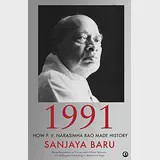
Just finished reading Sanjaya Baru’s new book — on 1991 and P V Narasimha Rao. (Article first published in +Medium click here to read)


In an increasingly polarised (and biased) world of journalism — Baru is from a fast vanishing tribe, who are able to keep facts separate from opinions and loyalties. He is one of the remaining few — who believe in research and corroboration through reading and interviews and do not pass off anecdotal evidence (read gossip) as “inside knowledge”.

Being an economic journalist and a seasoned political observer — Baru was particularly well placed to write this book that is as much about Narasimha Rao as it is regarding the economic watershed in India’s post-independence history. 1991 could have been a turning point for Indian politics as well had the Dynasty not struck back with vengeance — reducing PVNR from a man of destiny to a footnote in history.

It is divine retribution, perhaps, that after 25 years — there is a reassessment of his contribution restoring in small measure his rightful place as one who has significantly steered the country onto a new trajectory despite odds.

I have already tweeted a lot of snippets from the book as I was reading it. It is a serious chronicle of a very important period that may not interest a lay reader looking for juicy tidbits of the PVNR years. Therefore, it may not become a best-seller like his previous book The Accidental Prime Minister — which had a lot of ‘masala’ as it were. But, this is serious stuff for the archives.

Finally — the question that I was left with when I put down the book — was a counter-factual one: Where would India have been today — if it did not have the Nehru — Gandhi Dynasty ruling it (directly or via proxy) for the better part of 70 years ? My simplistic conjecture in hindsight are as follows:

If Patel or someone other than Nehru had become the first Prime Minister — it is most likely he would have still followed the Soviet model of Planned Development with a dominance of Public Sector, while paying lip service to the concept of Mixed Economy. But, where they would have most likely differed is on Nehru’s policy on Kashmir and China and probably not made the same mistakes.

Besides, we would have seen stricter enforcement of both economic legislation as well as general law and order in the country — arguably with lesser corruption. Most importantly — as PM they would have been the “first among equals” and not created a cult like Nehru — to lay the seeds of four generations of Dynastic Rule to follow.

One common thread in Baru’s recent works — are two Congress Prime Ministers, who achieved whatever they did despite the Gandhi family (specifically Sonia Gandhi)’s shadow.

There is little reason to believe — if Lal Bahadur Shastri could take Pakistan head-on in 1965 — someone else in his place would not have acted similar to what Indira Gandhi did in 1971. Also, probably, there would not have been the Emergency of 1975.

Going by Baru’s account — the country would have been better off economically if guided by professional economists and not suffered from the compromises of populist policies for the survival of a single family.

Finally, just to please the Left Libs on my time-line, it might have prevented the Hindutva backlash and, therefore, the rise of a Narendra Modi.

#SanjayaBaru #PVNarasimhaRao #SoniaGandhi #NarendraModi

Tuesday, August 09, 2016

Modi Town Hall


Article first published in +ABP NEWS Click here


The genius of Prime Minister Narendra Modi lies in always staying two steps ahead of his rivals. While his opponents are still struggling with Social Media, aping his Chai Pe Charcha or Mann Ki Baat, he goes Boom! and raises the bar with a US style Town Hall.

Warming up by – now almost a ritual – some friendly trolling of the media, he also sent out a gentle signal that he can communicate to the masses over their head. To the opposition and the liberal chatterati, his message seemed to be: I decide the subject of my discourse, select topics that I wish to speak on, at a time of my choosing.

So he set the agenda, and how!

Little did anyone expect him to take the ‘gaurakshaks’ head-on. And what a pasting it was. There were no pious platitudes on respecting all religions or other such homilies. To say more cows die of consuming plastic bags and waste and asking State Governments to prepare dossiers on self-appointed ‘Gaurakshaks’ was a double masterstroke that would have left even his raucous critics gasping.

If he disappointed Omar Abdullah and his close friends in the media by not talking about the ‘Valley’, he must have done so advisedly. The Government is working as per a strategy in Jammu & Kashmir and the Prime Minister would certainly not like to derail it by making a comment which is bound to given a different spin by those, to borrow his phrase about ‘Gaurakshaks’, who have opened shops in the name of Kashmir. Sending Rajnath Singh to Pakistan for the SAARC, he has already driven home the message to the jihadists across the LoC – that the Government will play in Kashmir as per its own rules which are not part of regional dialogue.

By deftly swinging the focus to agriculture, handlooms (Khadi for Nation, Khadi for Fashion) , Smart Villages not just Smart Cities, he quietly pricked some holes in the balloons of his friends across the aisle in Parliament. So, Rahul Gandhi’s speechwriters have to think of something new in place of the tiresome suit-boot. Sonia Gandhi won’t be able to speak just about the plight of weavers on her next trip to Varanasi. And, Lalu Prasad has to come up with something smarter than his earlier ‘smart villages’ quip.


What makes Narendra Modi’s speeches and exhortations potent is the ring of passion and authenticity in whatever he speaks. This cannot be achieved by mere oratory alone unless there is a genuine conviction at the core. Those familiar with the thoughts and writings of Swami Vivekananda would know about his obsession with “preventive healthcare”.

Safe drinking water, hygienic cooking, healthy eating habits, yoga and physical exercise had engaged Vivekananda more than a century ago. One can decipher a distinct impression of his teachings in Narendra Modi’s views on these issues. For that, one does not need an Oxford Economist or Harvard-educated lawyer as Prime Minister, but someone with a heart and common sense.

Of course, one can almost visualise Sanjay Jha or someother bright young Congress spokesperson saying on TV – even Rahul Gandhi understands the importance of safe drinking water – as he always carries his bottle of Evian while visiting Dalit homes.

Talking of “last mile” first, the Prime Minister reminded the States of their responsibility to reach governance to the grass-roots. But, the message is equally relevant for his party colleagues and Sangh followers. Narendra Modi alone cannot keep shouting from the ramparts of Red Fort, Town Hall or Mann Ki Baat. It is also for them to carry the message to the last man in every town and village.

Sunday, June 19, 2016

What do we really know about Priyanka Gandhi ?


Click here to read original article in +DailyO India Today 


Hope Priyanka campaigns outside Amethi, Rae Bareli.
– Ghulam Nabi Azad, India Today

The clamour for Priyanka Gandhi to come to the forefront is gaining traction. “Priyanka lao, Congress bachao” — has been the refrain among Congress workers in Uttar Pradesh for quite some time now.


Of late, many well-wishers of the Congress in the media have also joined the chorus or been co-opted to endorsing the prescription. Therefore, Azad’s statement is no surprise and is part of a carefully crafted “soft launch” strategy to use a marketing parlance. Yet, it is loaded with presumptions. Let us examine.

It is believed Priyanks made Rahul agree to that disastrous interview with Arnab Goswami.
Very little is known about Priyanka Gandhi, not just to the general public, but also to large sections of Congressmen and leaders — beyond her stunning looks, charming smile, elegant cotton saris and hair-style that reminds people of her grandmother. The rest are largely impressions gathered from snippets on TV and occasional crisp sound bites — mostly while campaigning for her mother or brother in the family constituencies of Amethi and Rae Bareli.

Beyond this, her rare extended interaction with the press and public was in an interview with a high-profile news anchor some years back, which not many would have watched given the paltry viewership of English news channels in India. I remember it for two revelations. First, that she owes her excellent Hindi to Mrs Teji Bachchan — mother of Amitabh Bachchan. It was, perhaps, the only acknowledgement in many years by any Gandhi about the contribution of the Bachchans to their family. Second, her remark about why she takes her children along on constituency tours. This, for me, was a clear indication that she wants her children to also join the family political enterprise.

Everything else is largely speculation, calibrated leaks or carefully planted seeds. For example, it is said that she is a great cook and the evidence cited is the samosas and idlis she serves to the staff in her political secretariat (that could well have been made by her kitchen help or easily ordered in from Sukh Sagar).

Not much is known about her political acumen — except that she is a key member of the Gandhi family council.

It is generally believed she was the one who made Rahul Gandhi agree to that disastrous interview with Arnab Goswami on Times Now — which, by popular consensus, was the last nail in the coffin of Congress campaign for 2014 elections. If that is correct, one cannot give her high scores for political judgment and media strategy.

Also read: Prashant Kishor can’t make Congress win UP. Rahul Gandhi won’t
There are other rumours, or shall we say gossip — about her temper, mood swings and arrogance — but few dare speak of them above hushed tones.

Though it is said that, there is nothing “private” about public personalities, it would not be proper to talk about her personal life. But since she has given no definitive indication of her aversion to entering politics — it is not unfair for us to expect her to clarify her position on various allegations against the family.

Here, one is making a distinction advisedly between “family” (sasuraal) and “paternal family” (maaika) as is the custom of this country. Like she asserts with a great deal of justifiable pride, “Main Rajiv Gandhi ki beti hoon” — one would have liked to hear her say: “Robert Vadra mera pati hain” (not “Main Robert Vadra ki patni hoon” or “Main is ghar ki bahu hoon”,feminists take note) — as per Indian tradition, which the Gandhi family avers by. While Sonia Gandhi takes every opportunity to remind us she is the “daughter-in-law” of the Gandhis, we have not heard Priyanka make any such claims about being a “Vadra bahu”.

So far, there is not much of empirical evidence available on her political fungibility, except that she displays streaks of Indira Gandhi — that can be good or bad, depending on which traits one is alluding to. If by any chance, she has traces of the Emergency avatar of her grandmother, or the 1984 riots image of her father, then there is enough reason for the country to worry.

Therefore, for the present, it has got to be a pure leap of faith for Congressmen, Congress supporters, Gandhi family retainers and fan clubs alike — banking entirely on her dynastic credentials and charisma.
________________________________________
Originally published at +DailyO India Today 

Tuesday, January 19, 2016

Pathankot Attack

Is Pathankot Doval’s Second Kandahar?


Article First Published in +ABPLIVE (click here to read)

Just on the eve of the New Year – a retired intelligence officer who had accompanied Ajit Doval on the Kandahar rescue mission – recalled in a tweet its 15th anniversary and what a New Year celebration it was for them on return. In sharp contrast, 2016 – opened with the Pathankot attack.

The sister publication of this channel – Ananda Bazar Patrika, the highest circulated Single Edition Daily, had a tongue-in-cheek headline “Doval-ee Doba-len Pathankot-e”. Though the nuance of the pun is lost in translation – roughly it meant: Doval “goofed up” Pathankot. A day ago – the group’s English Daily – The Telegraph, Calcutta – carried a well-researched account of how the Pathankot counter operations were mishandled and raised numerous unanswered questions over the attack and its subsequent handling. The refrain has been similar across large sections of mainstream media.

As expected in this day and age of Social Media, the cacophony of rival choirs – one singing accolades for Doval and the other running him down–filled the airwaves and choked intellectual bandwidth. The mysteries and gaffes apart – there was no doubt that Pathankot – was a phenomenal attack on a defence base, just as Mumbai 26/11 was on civilians. What set apart Pathankot even more was – the almost simultaneous assault on the Indian Consulate in Mazar-i-Sharif, Afghanistan. Discerning analysts who are not caught up in jingoistic crossfire on TV and Op-eds - were quick to pick up the distinguishing features of the latest denouement. First, the chinar-leaf of Kashmir has been dropped and now it’s a no-holds bar attack on India. There was none of the customary denials of where the attackers came from and the control station of the operations. Finally – parallel opening of the Afghan front was a loud and clear signal for India – to stay-off Pakistan’s backyard.

On the domestic front – with Doval taking most of the ire and flak – to an extent spared the Prime Minister of a frontal attack by the opposition and media. But, does this also indicate a weakening of Narendra Modi’s -“leveling” as it were – in one area where he was head and shoulder over his predecessors and contemporary Asian leaders?

In a previous article – this author had himself argued that however stage-managed and choreographed the stop-over at Lahore – was necessary to apply soothing aloe-vera over the blisters that Pakistan had surely developed after display of camaraderie in Kabul. But, as it turned out, the bon-homie with one Sharif (Nawaz) probably left the other Sharif (Army Chief, Raheel) smarting – just like Musharraf was miffed after Vajpayee’s Lahore bhai-chara.

Was there a miscalculation in choosing the hug and holding hands photo-shop moment – prompted as it might have been by common friends in  Washington - preceded by a well-publicized meeting between the two NSAs on neutral ground (Bangkok) ? Certainly – hyping it up as “unconventional” and “out of the box” diplomacy was premature. By now, both Modi and the Indian establishment should have realized that dining with Nawaz Sharif was as futile as Modi having “Chai-pe-Charcha” with Sonia Gandhi. Neither want him to succeed.

Clearly – the PMO (meaning the NSA) and the Foreign Office should have better anticipated the mood and tested the ground in Lahore before letting the Prime Minister make an unscheduled landing there. As one redoubtable commentator has pointed out –Nixon’s China Visit came after months of preparation by Kissinger.

The subsequent blabber over Pakistan’s action (which some TV anchors eloquently called “back-stabbing”) ranging from remonstrations to restraint (the ‘talks must carry on’) reveals confusion in India’s Af-Pak policy that is akin to what one sees on issues of the economy and reforms at home. Coming after the Bihar setback – as it does – it may not augur well from the Prime Minister’s standing in the balance 3 odd years of his term.

The trajectory of Modi’s tenure seems to be trailing that of Obama. First disappointments on the domestic front – followed by setbacks in foreign policy. Already one sees RSS increasing control over by appointing “Pracharaks” at the helm at many places – West Bengal, Rajasthan – now probably UP and Bihar too. Though far from being a ‘lame-duck’ Prime Minister by any stretch of imagination – there is need for some strong rear-guard action – not just to stop the slide and check the drift but recover lost ground and put Modi back in the driver’s seat once again.

But, Pathankot like Kandahar will hang around Mr. Doval’s neck like a cross for a long time to come – unless neutralized in a short time.

Thursday, December 10, 2015

What does Sonia Gandhi's Mother-in-Law fixation "Herald" for the "Nation"


Kyun ki Saas bhi Kabhi Dictator Hoti thi


Article first published in +DailyO India Today (click here to read)


Sonia Gandhi’s words – “I’m Indira Gandhi’s daughter-in-law” – are ominous. We all know what the nation had to go through when a single judge of the Allahabad High Court had indicted Indira. Then, as the Lutyens’ folklore goes, she went by the personal advise of Siddhartha Shankar Ray, more a friend and confidante than a lawyer – waking up the President late at night to sign on the dotted line of the Emergency ordinance. Though the Congress wasn’t short of legal luminaries even then – none came out pouncing on the Allahabad High Court judgment nor did MPs create pandemonium in Parliament.

But, now a mere order for personal appearance in court – has all the legal eagles of Congress hyperventilating in public – making insinuations of political vendetta – that borders precariously on the edge of contempt of court. One also doesn’t recall either of Indira Gandhi’s two sons holding out threats akin to “I shall reply in the Parliament” – though the younger one, Sanjay, did emerge from behind the curtains much later when the Emergency was well under way (so, there may be some merit in the view that Rahul is cast more in the mould of his uncle than the father).

Congress MP’s, loyal subjects of the Queen as they are, brought both houses of Parliament to a halt – with cries of political conspiracy and witch-hunt - putting at stake the already fragile fate of the Winter Session.

One shudders to think – if this is happening when the Congress is out of power and down with 44 MPs in the Lok Sabha – what would the worthy “Bahu” have done following her revered Sasu-Ma’s footsteps if the UPA were ruling today.

Yet, this is the same Congress that swears by the independence of the judiciary and asserts authorship rights over the Constitution. “Let the law take its own course” and “the guilty be punished” are pet phrases of Congress leaders – when it comes to people other than their own royalty. Thus even the redoubtable Lalu Prasad Yadav had to spend a few days tending to the gardens of Ranchi Jail – not to forget lesser allies like A Raja and Kanimozhi who were long-stay house-guests at Tihar. Of course, Narendra Modi is considered convicted without any court having pronounced him so and Amit Shah’s sentence – only reinforced people’s faith in the country’s judicial system.

It can be argued that – such exaggerated reaction of the Congress and its first family – only points towards guilt and real fear of exposure. If the Gandhis and the many star lawyers in the Congress’ fold are so supremely confident of their case – why should they be afraid of going through the due process of law? But, that is going into the realms of speculation of a matter that is still sub-judice.

Similarly, It would be disingenuous to suggest that this entire development is a ploy by Narendra Modi’s detractors in and outside the BJP to derail his “truce” efforts for getting the GST Bill passed and make his position even more vulnerable post the Bihar election set-back.

What is most worrying, however, is how easily the anti-BJP political spectrum and a large section of the media have bought into the “vendetta” theory – totally ignoring the implication on the stature of the judiciary. They don’t seem to be a wee-bit worried that it reveals an imperialist mindset of a dynasty that considers itself to be the natural rulers of this country and, therefore, by definition above the law. So, anything from allegations of land-grab against the son-in-law or bending state government laws for construction of summer retreats in the hills to misappropriation of trust funds are turned on its head by a single-point counter-accusation of political vengeance.

People who are constantly crying wolf about the spectre of Emergency being imposed again, would do well to pause and reflect – for all his perceived flaws Narendra Modi has never run away from the law. He has faced trials – albeit with the best of legal defence as anyone is entitled to – and come out acquitted. Nor has Modi – tried to bypass the judiciary to get even with his political adversaries. Even assuming – the BJP  (like many other governments before him) has used investigating agencies for political ends it has always deferred to the courts (Teesta Setalvad being a case in point).

Therefore, those concerned about the fate of democracy in India need to seriously ponder – whether the nation is safer in the hands of a democratically elected homegrown chai-wallah who may have graduated to wearing monogrammed suits or a lady who has devolved from Sable Coats to Cotton Sarees  – but whose natural upbringing makes her genetically coded to fiercely protecting the family’s existence – perhaps, the very same quality she so admired in her Mother-in-Law.

Saturday, December 05, 2015

Modi Outreach or Out of Reach ?


Article first published in +ABP NEWS (click here to read)

Narendra Modi is one politician – who can never do anything right – at least as far as the media is concerned. Last week after his stirring speech in the Parliament on Constitution Day (which itself became a subject of controversy) Op-ed pundits strenuously analyzed how the speech was high on rhetoric but short on authenticity. When PM Modi invited Sonia Gandhi and Man Mohan Singh for tea prior to the start of the Parliament Winter Session – his critics could barely conceal their glee. The suggestion being – the PM had to get off his high horse to taste the dust of Bihar.

But, to cut the chase – is PM Modi really trying to reach out ? Has he come to a belated realization that confrontation can only get him thus far and from here on the journey could well be down-hill with Congress’ Lion King-in-waiting having drawn his first blood and the rest of the opposition discovered the magic tape to hold together a disparate bunch, at least in the short run.

The post-Diwali Milan at the BJP HQ – almost a month after the festival seemed like an afterthought. At least going by the photographs of the now customary ‘selfie’ session with the PM published in the media, the big guns of the media and stars of News TV gave it a miss this year – probably having got their selfies clicked last Diwali and knowing it will be just a social ritual sans any “Breaking News” moment.

Beside this – one has seen little evidence so far of the PM trying to offer the olive branch to his detractors. He has carried on with his official business as usual and gone ahead with his overseas travel schedule ignoring expected digs from the opposition, media and Twitter chaterati (albeit everyone knows these foreign engagements are committed months in advance). So, is there any reason to believe Narendra Modi will drastically change his style – stoop a little to conquer – to overcome odds that might otherwise derail him prematurely after a dream start just18 months ago? Or, putting it plainly is he even capable of such a radical transformation – even for a brief period?

The answer to both those questions is a resounding “NO”. First, he is too proud (call him an irredeemable egotist or the man’s hubris if you like) to climb down – at anyone’s threats or bullying. He would rather break – and fight to finish – than bend. Second, he is acutely aware that being seen to compromise publicly would not only be totally out of sync with his character and brand personality – but come across as even less genuine. Above all, he is too sharp and politically savvy not to realize – that any number of “Chai pe Charcha” or backroom deals are going to assuage the Gandhis – who see him as the single biggest threat to the survival of the dynasty.

One remembers – in the latter part of the campaign – when he was surer of his victory – Modi told some interviewers: “to win an election you need votes, but to run a country you need the support of the entire country”. He repeated this again in Parliament and was seen extending courtesies to Sonia Gandhi in the opening session. But, it ended there. Many believe, with some justification, the initial show of grace and desire to be seen as inclusive was more for effect than real. But, one could also argue conversely, Modi had already sensed it was just a matter of time before the ‘dynasty’ struck back with vengeance and, therefore, it would be futile to try and build bridges with them.

Going forward – therefore, it is unlikely that we would see greater bonhomie between Modi and the Congress. Both are stuck with their own existential compulsions. While the Gandhis have little option but to fight for existence, Modi can’t give up – or even temporarily set aside – his mission of demolishing the Nehru-Gandhi legacy for good. He can’t do this by simply tripping them on legal chinks in the family – be it Vadra land deals, black-money or National Herald case – as many of his lay supporters naively suggest – but by systematically dismantling the aura and myths created around them over six decades. And, that is going to be long drawn war of wits.

What we might definitely see in the coming days is Modi and his aides more actively reaching out to the non-Congress opposition and regional parties – luring them with sops and reprieves as indeed more concerted direct contact with his core constituents – while he puts his governance and reforms agenda into high gear. But, for this he has to fix his communication and media strategy double quick as has been widely commented and start relying more on experienced colleagues – like Nitin Gadkari  - and put CMs of BJP ruled states  to better use – rather than just a handful of trusted lieutenants. One redeeming feature – of the current crisis – is how some hitherto ignored young articulate MPs like Meenakshi Lekhi have risen to his defense in Parliament. He would need to press many more like her into action.

Finally – despite criticisms if PM Modi is continuing with his peripatetic foreign policy it is not without a purpose. He wants to build on the equity he has acquired among the global leaders – with whom he finds much easier to communicate and establish rapport than with a few cussed septuagenarian regional chieftains. He knows – as long as the international power bloc sees him as their best bet in India – he has a better chance to counter external forces that Congress will no doubt try to enlist in their insidious campaign to unseat him – as was apparent from recent utterances of Mani Shankar Aiyar and Salman Khurshid.

There is no doubt whatsoever it will be a bumpy road ahead till 2019. But, Modi has enough tenacity to weather the storm and come out a winner.

Friday, March 06, 2015

Non-aggression is a "Non-Option" for Modi Government in Parliament

There is a great deal of sadistic joy being derived by politicians, media pundits and social media “liberalati” on the apparent “setback” suffered by the government – after an united opposition forced an amendment to the motion of thanks for the President’s Address. Media reaction ranged from “embarrassment” to “government left red-faced”. The Trinamool Congress rejoiced at their pyrrhic victory – by an unprecedented act of convergence with arch-rival CPI(M) - their Parliamentary party leader, Derek O’Brien, calling it “the Rajya Sabha’s equivalent of a vote of No Confidence”. Many a commentator has already written the epitaph of the Land Acquisition, Insurance and other bills in the parliamentary pipeline saying Modi’s arrogance is going to cost BJP dearly.
It is unlikely that the PM Modi hadn’t bargained for any reaction– after what was by any standards a provocative speech. If he left the House immediately on completion of his speech – without waiting for any questions or rejoinders – it must have been a pre-mediated move and not guided solely by considerations of parliamentary protocol. While the absence of BJP MPs from the house was singularly unpardonable – they being around would not have made much difference as the NDA is hopelessly short of numbers in the Rajya Sabha.
It is debatable if better “floor management” could have saved the day. Some feel the BSP, SP and BJD may have been persuaded not to go against the government at least on this occasion - but expecting the Congress and CPI(M) to have yielded after the vitriol that was poured over them in both houses (in the Rajya Sabha and the Lok Sabha ) was wishful thinking.
Narendra Modi’s combative mood was evident from his swipes as “Zamana badal gaya hain, sunna padega ji” – not to mention, his going for the jugular on MNREGA in the Lok Sabha - which was undoubtedly targeted squarely at Sonia Gandhi sitting across the aisle. And, oh boy – did the message hit home? One had to only watch Madam’s expression on TV to know. Therefore, if he chose to be aggressive it must have been advisedly so. This might hold some clue on what could the government’s strategy in the days ahead is going to be as it braces up to negotiate some vital pieces of legislation on which rests not just BJP’s economic reforms agenda – but also, as the Prime Minister so lucidly explained , many of the welfare and developmental initiatives linked to them.
In an earlier article even this author had argued that Modi should – perhaps – have adopted a more “inclusive” or reconciliatory approach in governance carrying the opposition with him to the extent possible. That he has chosen not to do so - can’t be due to his ego and authoritarian temperament alone. Whether one likes him or not, there is no underestimating Modi’s political acumen – as he himself chided the opposition in Parliament. If he thought – offering the olive branch to the Opposition was the solution, he would have done so long back. It’d be simplistic to suggest he has been blinded by power not to see the obvious.
Erudite political analysts have criticised the “modern day Alexander” streak in Modi – with Amit Shah being his proverbial “Ashwamedh” – suggesting this is creating deep insecurity not only among BJP’s opponents but also its allies. It is also being argued – after Jharkhand, Kashmir and, now, most recently the Delhi rout – this strategy has run its course and can only yield diminishing returns, if not become outright counter-productive, going forward. Therefore – if Modi has decided to play on the front-foot it must only be after careful consideration. Even before the elections – Modi had figured out he had to go it alone all the way. None of the left of centre parties would risk jeopardising their traditional vote-bank (dilute their labels of “secular” or “friends of the poor and farmers’’ – as opposed to industrialists) for the fear of total extinction. Little has changed even after the elections. Those – who had to switch sides, have done so lock, stock and barrel (though one is yet to see any real exodus yet). For others it’s too early to give up their core “positioning”, which they are only trying to consolidate it by strange mating rituals driven by strong Darwinian instincts of self-preservation, as it were. And, to expect the Congress to play a “bi-partisan” role – under their current self-centred leadership – would be dreaming of Ram Rajya indeed.
Another learning for Modi government has been - alliances have been formed through hard-negotiations by subtle show of strength and occasional brinkmanship. They have to be held in place also by exercising the “upper-hand” at all times. Slightest signs of faltering or weakness – and partners like the Shiv Sena immediately start flexing muscles demanding a fresh pound of flesh. Allies will play ball only as long as BJP is in the driver’s seat. For that Modi-Shah’s expansionist forays have to continue relentlessly.
Though the merits of a strategy can only be judged in hindsight – and therein lie the test of a leader – for the moment “non – confrontational” parliamentary politics is not an option for Modi government. If civilised discourses and genteel persuasion were the solution – then Arun Jaitley’s cerebral speeches and dinner diplomacy would have won the day. But, here we are dealing with mauled tigers – which won’t be tamed just by applying poultice on their wounds. Sure, backroom negotiations will happen. But, they will have to be with real carrots and sticks on the table – and not soft cajoling and coaxing - over litti-chokha (in any case Bengali “fish-fry” is a no-no for vegetarian Modi).
But, in the final analysis, Modi is the prime minister today by virtue of an overwhelming popular mandate. Ultimately he will have to carry the message back to the people. In this, he is fighting a lonely battle. It is ironical that Modi’s biggest gift – communication - is also proving to be his Achilles Heel. Modi’s only cheerleaders are his band of hand-picked loyal ministers - mostly the young lot. By choice, he has marginalised the old guard. The RSS and its nominees in Parliament have little stake in Modi’s reformist agenda. There will always be that uneasy tension with the old regional satraps – like Raman Singh and Shivraj Chouhan. Seniors like Rajnath, Sushma and Gadkari – who share a mutual wariness with Modi - would play it safe and won’t stick their necks out for Modi. To that extent, he suffers from the same handicap as the UPA, which was often called a government of “technocrats and bureaucrats”. This leaves only Modi alone to control the narrative – with little help that he can get from Arun Jaitley and Amit Shah. He did it successfully – during his run up to the Lok Sabha - managing his entire campaign out of a war-room in Gandhinagar with a crack team (and, probably, an international Communication Consultant – as many allege). But, he can’t remain the lone crusader when he is the PM, as the position itself puts major constraints on him like we saw during the Delhi elections.
At present Modi has the entire Opposition, NGOs, media left-lib intellectuals and some sections of businessmen rallying to derail him. So far, Modi has managed to successfully neutralise (even if for the time being) the international lobby. He could isolate another vital link in the chain by co-opting the media - who – feeling left out as jilted lovers – would be too willing to queue up and offer their hand – if only Modi whispers “Barkis is willing”. It may not honeymoon on a bed of roses thereafter – but life can certainly be a bit less stressful.

Article first published in @DailyO_ (click here to read)

Sunday, May 13, 2012

"Vanishing" Poriborton


So Mamata completes a year in office.  In the coming days newspapers , magazines and television  will try to outdo one another with articles and features analyzing ad nauseam her  performance so far, to which – no doubt -  Op-Ed writers and “Bidwojon-s” of  the National Media will add their wisdom and pass  ‘interim’ judgment. So,  thought it is an opportune time for me to tuck-in my 2 penny bits to it before other illustrious and more qualified people get into the act.

A very senior Delhi-based columnist and media commentator, a non-resident Bong, has been commissioned by a top national magazine to do such a piece on Trinamool’s 365 days in power. I was mildly flattered, when he invited me for a beer at one of the clubs – to have my take on some of the issues. And, it took  me just a swig of Kingfisher to launch into my pet rant on everything that Mamata and TMC seem to be doing wrong.

But, about half-way through our conversation, I paused like a subject on a therapist’s chair, and asked – wait a minute, are we being entirely fair to her? After a while – we both agreed, it’s probably too early to write her off yet and the jury is still out.  Disenchantment is a creeping process – though it may not take another 34 years, as it did to throw CPIM out – it’ll be some more time before it turns into a tide against her.  For that to happen earlier, she has to commit some terrible blunders – which she probably won’t, as – at the end of the day – she has too much political horse-sense to know she can’t mess around with her constituency beyond a point.

Megalomania or Incipient Paranoia

Yet, she is beginning to show disturbing signs of megalomania. Her intolerance to criticism, vulnerability to flattery and sycophancy  and – what the famous Ashish Nandy calls  - incipient “paranoia” (they want to “vanish” me ), reveals some shades of Indira Gandhi in the height of power. Though, it would be rather harsh to call them fascist traits as few die-hard cynics might tend to do.

Again like Indira Gandhi followed a different agenda at home and abroad – Mamata has a different line in the state and another one for the centre. When in Delhi, she flirts with non-Congress CMs to play the ‘federalism’ card (NCTC) , takes adversarial positions with the Centre on matters of fund allocation to the state and policy issues such as FDI in Retail. She wants to be consulted foreign policy issues with neighbours (Bangladesh - Teesta).  These too are reminiscent of Mrs Gandhi’s and parallels can be drawn with her dalliance with the Soviets and the “Non-aligned” Block or trying to prop up SAARC.  Back in Calcutta – she reverts to IG’s “Garibi Hatao” like populist chant of “Ma, Mati, Manush”.


Take a deep breath

There’s absolutely no denying , what brought  Mamata to power is her  call for change – “Poriborton” . But, while capitalizing on it for electoral success – she hasn’t been able to harness the goodwill, enthusiasm and positive energy of the masses for transformation of the state.  Something that, a Nitish Kumar in Bihar and Narendra Modi has been able to do. Today, one can feel a palpable pride among the Biharis – which has also been transmitted to the Diaspora living across the country and even overseas. In Gujrat too – the heightened sense of  chauvinism fuelled by the  state’s success in almost every field  is there for all to see – not just at the Vibrant Gujrat summits or the Amitabh Bacchan’s “Breathe in a bit of Gujrat’ TVCs.  ( See one by clicking here http://www.youtube.com/watch?v=VdcEqUtTcfc )

Attitude is everything


What is needed to transform Bengal – is a change in the work culture and attitude of people. Industry and investment will come in only with that – not by trying to market the state by signing up Sharukh Khan as Brand Ambassador and holding Bengal Leads or Rising Bengal Summits – a la Gujrat.

And, no one was better placed to do that than Mamata Banerjee. Even her worst critics would admit, Mamata’s singular strength is her ability to connect with people.  it's not for nothing that, TIME Magazine has named her among the 100 most influential persons in the world today. She has an earthy charisma and the girl from down the lane who-made-it-good  appeal, which she could use to her advantage to become a truly inspirational leader of the masses. Her call for change shouldn’t have ended with asking for votes for a change of guard at Writers’ Building – but going much beyond that to imbue the people with a new spirit of determination and enthusiasm to transform the state from within. Alas, this is where she has failed  to rise to the challenge and display the qualities expected of a visionary leader.

Governance is the key

The second issue where she seems to be completely out of depth – and in which both Nitish and Modi have scored spectacularly – is governance.  This is an area she should focus on to salvage the state from the morass it is swamped in. To do that would mean two things. One she has to cut off the politicians and establish direct channels of administration – as Nitish, Modi and – to some extent – even a Navin Patnaik has done.  But, perhaps – she can’t do that because she needs her party network to counter the grass-root machinery of the CPIM.

In the process, she is weakening the state administration, without - perhaps - realizing it,  even more than what it used to be during the Left Front rule. This is coupled with her lack of trust in her won colleagues and the scant regard with which she treats the bureaucracy or officials (as was evident in her action against  the South Calcutta Dy. Commissioner of Police, Damayanti Sen after the Park Street “rape” incident or from the peremptory manner in which she deals with senior  bureaucrats in public).


Forget a Nitish or Modi – who have some of the most competent and progressive officers  working for them , whom they have empowered completely –  a Mayawati or Akhilesh Yadav  too realize the importance of an efficient bureaucracy. People may have different views on the things Mayawati  (or, say  Jayalalitha  in her previous terms ), may have done in her 5 years – be it building gigantic monuments or getting private operators of her choice to make world-class Expressways. But, she couldn’t have achieved any of it without having officers with strong execution capabilities under her. And, all of them realize the importance of law and order in governance. So, even the detractors of Mayawati credit her for retrieving UP from “goonda raj”.

Listening (in)ability


The next is the ‘trust’ factor. All good leaders have a few strong aides, political managers and administrators around them. They understand the value of experience.  But, Mamata doesn’t make use of talent.  She has made all the capable people around her ciphers. A Subrata Mukherjee or Saugata Roy – could very well have played the role of elder statesmen in the party or government. But, they have been sidelined. The story of Dinesh Trivedy is well known. An Amit Mitra and Manish Gupta are non-entities in her scheme of things. She is the No 1, 2 and 3 of the party as people say of Sonia in the Congress (the cartoon below could have would be true of her as well  - just that no cartoonist would dare lampoon her anymore).  A leader must also have the time and patience to “listen”. But, she loves the sound of her own voice too much and is a narcissist when it comes to her own thoughts and ideas. 


But, more dangerously - perhaps - she seems to believe she alone has all the answers. someone joked, after Tagore, Mamata is probably the most versatile personality in the history of modern Bengal . She is at once a politician, an administrator, an artist, a poet, a singer, a town-planner, an educationist. The list can go on.

She is not Caesar’s wife. She is (still) single


The last count on which she makes me extremely worried is corruption. All said and done – during the Left Front regime “corruption” was almost miniscule – as compared to the rest of the country.  There is an apocryphal story about a late CPIM leader having gone to a non-resident Bengali  tycoon, who had the reputation of being a ‘banker’ to many politicians, asking if would keep some of his money. It seems the tycoon told him – 'I don’t deal in small change, first learn to earn and then come to me".

This is changing very fast.  And, perhaps unalterably so. It is common knowledge that Trinamool is breeding all pervading corruption in the system and her party workers and leaders are all on the take, trying to make a quick buck while it lasts.  I don’t believe this is something Mamata is unaware of. Though personally, she may be unimpeachable (it would probably be an affront to her maidenhood to compare her with Caesar’s wife) – but, perhaps, she is helpless as this is a by-product of the political structure and organization she has created.  But, if left unchecked this may come to haunt her soon.

Bengal at a cusp


In most marriages the ‘honeymoon’ lasts for some time. But, there are some in which the trauma and ordeal start from the nuptial night itself.  This one seems to be like that. But, there are instances in which the most troubled relationships settle down over time and even give way to love. Let’s hope this turns out to be a case of the latter.

So, as I said at the start, it may be too early to put a ‘paid’ stamp on the Poriborton bill. Mamata (and, by association West Bengal) is standing at a cusp. From here things can go either way.  With intelligence and some amount of  wisdom and vision Mamata can check the secular decline of West Bengal and change its trajectory like Nitish has done to Bihar or Modi has been able to accelerate in Gujrat. The sad contra scenario could be, she would  take it down like Lalu – not by her lack of integrity or intent (as Lalu had )  – but by sheer administrative incompetence.
Sunday, September 04, 2011

Trauma and Coma

As the nation recovers from the trauma of the Anna Hazare’s Ram Lila Saga - the government seems to have quietly slipped back to its pristine state of virtual coma.

Sometimes I suspect, the peoples’ grouse against this government is not as much because it is deemed to be corrupt as it is considered incompetent.

At least the crisis had stirred the ruling party to some kind of action – however, misguided or ham-handed they might have been. But, once the situation was brought under control by the wily manipulations of the Machiavellian Bong – Congress’ “man for all seasons” , Pranab Mukherjee - the party seems to be again at a loss for direction.

I for one always felt that - Anna was merely a 'symbol' of the issue that is agitating the national psyche (Please read my earlier blog: Jai Ho by clicking here). By his near ascetic persona built on a Gandhian mould he was able to capture the imagination of the nation as a crusader against corruption. To me his idiosyncrasies – such as not allowing the youth of his village to drink and flogging them in public if caught – are no more relevant than Gandhi’s kinks of sleeping naked with nubile women and making his wife clean toilets. Equally, accusation of being an unelected, ‘self-appointed’ peoples’ representative etc, doesn’t wash. Today – by definition - you cannot win elections unless you are corrupt. Equally, any alleged chinks in the credentials of Anna’s associates can’t detract from their cause.

I could myself write a thesis on how corruption is ingrained in our bones and – notwithstanding the morality preached in our scriptures – Indians are genetically coded to be corrupt. So, I have no illusions that, a Lokpal Bill would have been a panacea (or to use the new favourite catchphrase “magic wand” – wand pronounced as ‘waand”) of all ills. But, that’s not the reason why we should throw the baby out with the bath-water.

The Prime Minister has himself acknowledged his government is perceived to be the most corrupt government in the history of India. The Lokpal Bill presented to him an opportunity to seize the agenda turn the problem on its head. He could have cleverly appropriated (or, in the least, co-opted) the ownership of the idea (as they had done – by default or design – in the case of RTI) and initiated effective steps to give the country a powerful machinery for tackling corruption. That would have also been a good way to shift away the focus from the individual to the larger cause. But, alas they lack both in intent and statesmanship.

Instead what we are seeing is the relapse of arrogance - with spin masters like Salman Khurshid asserting - "we may have made errors in judgment, but didn't commit any mistakes". We see the government and the party behaving churlishly - as if they were forced to swallow a bitter pill - which, being unable to digest, they are trying to eject out of their system by a combination of emetics and purgatives. In a classic case of shooting the messenger – the media has become the favourite fall guy to cover up the bungling of the government – the likes of Kapil Sibal suddenly feeling jilted by their favourite TV news anchors.

So, a GoM (group of ministers) has been appointed to tackle the media (making it difficult not to draw parallels with the Emergency) and the dirty tricks department has been commissioned to split ranks within Anna’s supporters, rent opposing voices of dissent, order searches and investigations to rip open their past and try to trip them with notices and charges of tax non-compliances or violations. The political crisis managers surely realize, far from embarrassing or discrediting them by these motivated actions – they are only exposing the government’s dubious designs further.

The first thing to do at such uncomfortable times is to cast doubts about the funding of the agitation. The Congress did this during the JP movement accusing it of being funded by the CIA and, I was reading Ajoy Bose’ Political Biography of Mayawati last night – the same insinuation was made against Kanshiram in the early days of the BSP. That could well be the truth, as Congress politicians surely know how political campaigns are financed. One hears similar whispers about Indian intelligence agencies inspired actions in our neighbouring countries. In Nepal, where I have lived for some length of time, almost everything – from rising prices to riots - is blamed on machinations of RAW. So, those who are asking, who paid for Anna’s medical bills at Medanta, may also like to put the same question to the first family of the Congress Party. The declared combined wealth of Sonia and Rahul would not be enough to pay for their trips, holidays and SG’s treatment abroad. But then, why should someone ask the obvious. (See link by clicking here)

The exercise of asking Ministers to declare their assets was similarly farcical. It raised more questions than it answered. If the idea was to build credibility and show transparency – the effect was just the opposite. Surely, the government doesn’t think the people of India are such morons to believe the ridiculous disclosures of wealth. But, they probably think that the people simply don’t care – so politicians can get away with anything.

One would have thought – the Anna episode would have served as a wake up call. But, alas you can’t hear the alarm clock in a state of coma.

Post-script

Pranab Mukherjee calls India – the greatest functional democracy, whatever that means. The truth is today – the government has stopped “functioning” and Congressmen are busier discussing the state of Sonia Gandhi’s health than the state of the nation.

Speculations are rife about how unwell she is and whether she’d be able to resume her normal duties soon or she’ll return briefly to anoint the 41 year old “Prince Charming”, if not for the big job, at least as the “working president” of the party.

It’s ironical when the Prime Minister underwent a major coronary by-pass surgery – the government didn’t think it necessary to appoint an interim head – the unstated assumption being everyone knew where the real power strings were firmly held. But, now that the mighty lady herself is out of action we are kept equally in the dark – as it is considered to be a “private affair”.

The nation’s right to know – who’s going to be in charge should an unfortunate eventuality strike – is kept firmly in suspended animation. The allies and the opposition are deferentially silent. I see this as a rather ‘dysfunctional’ democracy – though some would even go to the extent of calling it a Banana Republic.