Monday, June 25, 2012

Mumbai musings


Mumbai is in the throes of ACP Dhoble (Assistant Commissioner of Police, Vasant Dhoble)’s “social” (as distinct from “moral”) policing. Ever since  the Social Services Branch of Mumbai Police – placed under him -  busted a couple of ‘rave’ parties involving kids of celebrities , high and the mighty –  who later tested positive for drugs – the city has been up in arms against him. Rallies are being held demanding his removal and ‘anti-Dhoble protestors’  are  valiantly courting arrests

The socio-lectuals  (Mumbai is proud of the fact – it doesn’t have any ‘intellectuals) are outraged.  The media Diva – Tavleen Singh tweeted:  “If someone wants to have a rave in a private home why should the police have a right to interfere”. She went on to add,  “surely the police must be doing more to catch drug dealers and terrorists and less on catching adult revelers”.


--

Pooja Bedi, another great mind hidden in a fab body,  had a different take in her weekly column. While taking care to stay on the right side of Dhoble (her own social diary must be quite a rave) ,  she says power should not be used “selective”.


All this, probably, inspired Aakar Patel – the only true intellectual of our time,  to devote his entire weekly piece on the ancient India’s connection with cannabis.


Ordinary folks have  more simple concerns such as places like Amar Juice Centre in Ville Parle (Irla, actually – opposite Cooper Hospital) closing down by 11  –  one of the few places  in the suburbs people could find something  to eat  (other  than  5 Star Coffee Shop)  after a late shift or post midnight show  movie.

The man is no doubt controversial and there can be two views about his method and motives. Surely, this can't be a clamour for legalizing drugs. That Mumbai is India’s most hip city – doesn’t give it an unfettered moral licence. Even New York had to contend with a Robert Giuliani’s tough act. It is his ‘cleansing’ drive that made New York the city it is today. 


In a country where, most laws are more than a 100 year old – the Bombay Police Act of 1951 would almost appear modern. But, it is a law that was followed more by exception than as a rule.  I also don’t buy the logic that – it is the drug peddlers who need to be targeted more than the drug users. Where there is demand – supply will always find its way. So both ends have to be tackled simultaneously for effective result.  But, interpretation of the law is always a tricky affair. 


So, it is a thin line that would distinguish a lady making liquor chocolates at home as a  commercial “hobby”  under the Excise & prohibition rules and another selling Bhaang Ka Laddus under the Narcotics act. What so different between discreetly adding a driblet of opium into a hookah as opposed to rolling a joint at a party  - or, for that matter, between having a swig and a sniff of Coke.


Arsalan


Finally discovered Arsalan in Khar having heard a lot about it from friends on Twitter. It is at the junction of S. V. Road as come from the Khar Road Railway Station. Didn’t go in to check it out –  will take the word of the Tweeple fraternity for it –  but I was impressed by the look and scale of the place, nothing like their rather shady outlet one in Bangalore. I am sure the prices will be suitably indexed over Calcutta by the PPP factor of Mumbai. Apart from home delivery – it seems they have already started also a home catering service as I figured out from the display on their van parked outside. Why can't they do something on a similar style in their 'home town' of Calcutta, I wonder. Mumbai broadens people's outlook for sure.


--


Auto Rickshaw

Auto rides have become quite expensive in Mumbai. Last time I took one from our company guest-house to the domestic airport early morning charged me Rs 70 and I thought he jipped me. But, today I paid Rs 50 each way to Khar and back. In comparison – on a relative scale – taxis seem less expensive. A trip to Byculla cost me Rs 125. Looks like – the Auto Drivers’ Union (probably controlled by one of the two Senas) is more effective than the ‘immigrant Bhaiyas’ dominated Taxi Drivers’ outfit.

Aaj ka Slumdog


Child labour still thriving in the heart of Mumbai.  This young boy  was working “bindaas” at the Banarasi Sweet Shop and Restaurant, where I stopped by for a Lassi. The owner couldn’t be bothered. Why should they be – if customers like me don’t raise a voice and are happy to go away just by clicking a snap on the mobile phone ?

Saturday, June 09, 2012

Coonoor


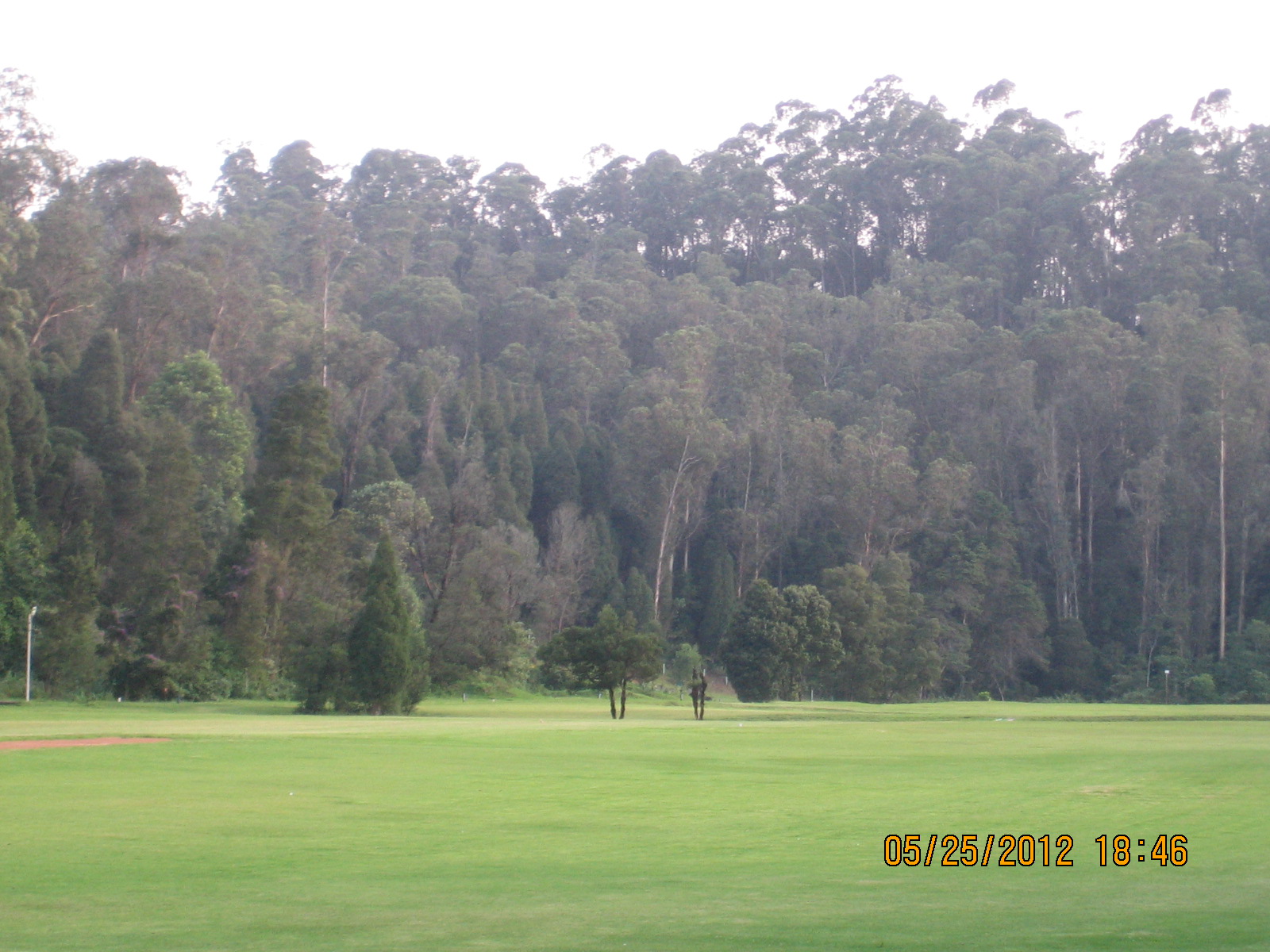
Spent a lovely week in Coonoor last month. It’s without a doubt our favourite hill station. The weather is just right -  never too cold - and it has little attraction for tourists other than the Sim’s Park for it to get over-crowded. We love  the Wellington Gymkhana.  Though the food , over the years, has become slightly indifferent and the service a bit variable – the view from the sit-out of the cottages , of the tea gardens and the golf course, makes up for everything.  For us it’s usually five days of doing nothing  - not even  Golf - except for long walks  and the mandatory visits to Bakers’ Junction in the evenings to pick up bread, locally made cheese (Gray’s Hill and Acres Wild) and Pomelo Marmalade.


The problem with Calcutta is the lack of getaways. It’s one more reason to miss Mumbai – with Goa just a handshake away or even Khandala, Pune and Mahabaleshwar at striking distance Delhi, Bangalore, Chennai all have more than their  fair share of places for short breaks.  It’s a pity though because very few states are blessed with such range of vista as West Bengal. Mamata Banerjee points out, for once got it correct (given her fantastic sense of Geography.  Remember her classic “Bengal is the gateway to the countries of the North East” and “Bangladesh, which is the border of Pakistan”? ).  West Bengal is endowed with natural bounty – from the Himalayas at one end to the Bay of Bengal on the other, traversing through forests, rivers and many heritage sites. But, the woeful infrastructure doesn’t offer many options for a decent holiday.  Especially after Darjeeling has gone out of bounds.,  a Bengali  traveling to the Nilgiris to enjoy the tea gardens may  not  be as New Castlenian (if one were to coin a term) as it may sound.  Today, Bangkok, Phuket and Langkawi (and even Kunming in China) have emerged as popular holiday destinations for Bengalis and Calcuttans thanks to ‘low-cost’ airlines and budget hotels.


On returning from Coonoor what hit me hard is not the steam-bath weather of Calcutta – but the cruel credit card bills. Though, we had the luxury of staying at the Club (which was a saving grace) – what dealt the killer blows are the air-fares and taxi bills.  Which begs the question – why can’t we holiday in India without having to go broke? Or is it that we have become too snooty and spoilt for our own good?

That’s probably being a little unfair. Basically, I don’t think we have got our act right as far as cost equations  go in the tourism and hospitality business  or  for that matter even in airlines ( perhaps,  Indigo  is the only exception).  So, what’s ‘affordable’ is really lousy quality and what is passed off as ‘budget’ is sometimes as steep as a good 4 or 5 star in Thailand or Malaysia.  Even neighbourly Nepal offers far greater value for money for an ordinary tourist. So, no wonder more and more Indians are opting to holiday abroad than at home.

There are exceptions, of course. Home-stays in Kerala have caught on. And, the latest Kerala Tourism ads promote it as a destination for all seasons and to suit all pocket sizes. Goa has something to offer at every price-point from the shoe string to the ultra luxury.  Rajasthan too operates across a range – from the bag-packers to the super rich.  But, that’s about it. In the rest of the country the infrastructure, particularly at the lower end of the spectrum, is worse than pathetic.


Yet, as the poet wrote, we travel the world but overlook the beauty at our own back-yard. As a Bengali, I am ashamed to admit that I have never been to the Sunderbans – partly because till recently no infrastructure worth its name existed there.  I am told now a few Eco Resorts have come up – which aren’t too bad.  Monsoons are certainly not the time to go there. But, I hope to make amends this winter and wade through a few pages of Amitav Ghosh’ The Hungry Tide. 

Sunday, May 13, 2012

"Vanishing" Poriborton


So Mamata completes a year in office.  In the coming days newspapers , magazines and television  will try to outdo one another with articles and features analyzing ad nauseam her  performance so far, to which – no doubt -  Op-Ed writers and “Bidwojon-s” of  the National Media will add their wisdom and pass  ‘interim’ judgment. So,  thought it is an opportune time for me to tuck-in my 2 penny bits to it before other illustrious and more qualified people get into the act.

A very senior Delhi-based columnist and media commentator, a non-resident Bong, has been commissioned by a top national magazine to do such a piece on Trinamool’s 365 days in power. I was mildly flattered, when he invited me for a beer at one of the clubs – to have my take on some of the issues. And, it took  me just a swig of Kingfisher to launch into my pet rant on everything that Mamata and TMC seem to be doing wrong.

But, about half-way through our conversation, I paused like a subject on a therapist’s chair, and asked – wait a minute, are we being entirely fair to her? After a while – we both agreed, it’s probably too early to write her off yet and the jury is still out.  Disenchantment is a creeping process – though it may not take another 34 years, as it did to throw CPIM out – it’ll be some more time before it turns into a tide against her.  For that to happen earlier, she has to commit some terrible blunders – which she probably won’t, as – at the end of the day – she has too much political horse-sense to know she can’t mess around with her constituency beyond a point.

Megalomania or Incipient Paranoia

Yet, she is beginning to show disturbing signs of megalomania. Her intolerance to criticism, vulnerability to flattery and sycophancy  and – what the famous Ashish Nandy calls  - incipient “paranoia” (they want to “vanish” me ), reveals some shades of Indira Gandhi in the height of power. Though, it would be rather harsh to call them fascist traits as few die-hard cynics might tend to do.

Again like Indira Gandhi followed a different agenda at home and abroad – Mamata has a different line in the state and another one for the centre. When in Delhi, she flirts with non-Congress CMs to play the ‘federalism’ card (NCTC) , takes adversarial positions with the Centre on matters of fund allocation to the state and policy issues such as FDI in Retail. She wants to be consulted foreign policy issues with neighbours (Bangladesh - Teesta).  These too are reminiscent of Mrs Gandhi’s and parallels can be drawn with her dalliance with the Soviets and the “Non-aligned” Block or trying to prop up SAARC.  Back in Calcutta – she reverts to IG’s “Garibi Hatao” like populist chant of “Ma, Mati, Manush”.


Take a deep breath

There’s absolutely no denying , what brought  Mamata to power is her  call for change – “Poriborton” . But, while capitalizing on it for electoral success – she hasn’t been able to harness the goodwill, enthusiasm and positive energy of the masses for transformation of the state.  Something that, a Nitish Kumar in Bihar and Narendra Modi has been able to do. Today, one can feel a palpable pride among the Biharis – which has also been transmitted to the Diaspora living across the country and even overseas. In Gujrat too – the heightened sense of  chauvinism fuelled by the  state’s success in almost every field  is there for all to see – not just at the Vibrant Gujrat summits or the Amitabh Bacchan’s “Breathe in a bit of Gujrat’ TVCs.  ( See one by clicking here http://www.youtube.com/watch?v=VdcEqUtTcfc )

Attitude is everything


What is needed to transform Bengal – is a change in the work culture and attitude of people. Industry and investment will come in only with that – not by trying to market the state by signing up Sharukh Khan as Brand Ambassador and holding Bengal Leads or Rising Bengal Summits – a la Gujrat.

And, no one was better placed to do that than Mamata Banerjee. Even her worst critics would admit, Mamata’s singular strength is her ability to connect with people.  it's not for nothing that, TIME Magazine has named her among the 100 most influential persons in the world today. She has an earthy charisma and the girl from down the lane who-made-it-good  appeal, which she could use to her advantage to become a truly inspirational leader of the masses. Her call for change shouldn’t have ended with asking for votes for a change of guard at Writers’ Building – but going much beyond that to imbue the people with a new spirit of determination and enthusiasm to transform the state from within. Alas, this is where she has failed  to rise to the challenge and display the qualities expected of a visionary leader.

Governance is the key

The second issue where she seems to be completely out of depth – and in which both Nitish and Modi have scored spectacularly – is governance.  This is an area she should focus on to salvage the state from the morass it is swamped in. To do that would mean two things. One she has to cut off the politicians and establish direct channels of administration – as Nitish, Modi and – to some extent – even a Navin Patnaik has done.  But, perhaps – she can’t do that because she needs her party network to counter the grass-root machinery of the CPIM.

In the process, she is weakening the state administration, without - perhaps - realizing it,  even more than what it used to be during the Left Front rule. This is coupled with her lack of trust in her won colleagues and the scant regard with which she treats the bureaucracy or officials (as was evident in her action against  the South Calcutta Dy. Commissioner of Police, Damayanti Sen after the Park Street “rape” incident or from the peremptory manner in which she deals with senior  bureaucrats in public).


Forget a Nitish or Modi – who have some of the most competent and progressive officers  working for them , whom they have empowered completely –  a Mayawati or Akhilesh Yadav  too realize the importance of an efficient bureaucracy. People may have different views on the things Mayawati  (or, say  Jayalalitha  in her previous terms ), may have done in her 5 years – be it building gigantic monuments or getting private operators of her choice to make world-class Expressways. But, she couldn’t have achieved any of it without having officers with strong execution capabilities under her. And, all of them realize the importance of law and order in governance. So, even the detractors of Mayawati credit her for retrieving UP from “goonda raj”.

Listening (in)ability


The next is the ‘trust’ factor. All good leaders have a few strong aides, political managers and administrators around them. They understand the value of experience.  But, Mamata doesn’t make use of talent.  She has made all the capable people around her ciphers. A Subrata Mukherjee or Saugata Roy – could very well have played the role of elder statesmen in the party or government. But, they have been sidelined. The story of Dinesh Trivedy is well known. An Amit Mitra and Manish Gupta are non-entities in her scheme of things. She is the No 1, 2 and 3 of the party as people say of Sonia in the Congress (the cartoon below could have would be true of her as well  - just that no cartoonist would dare lampoon her anymore).  A leader must also have the time and patience to “listen”. But, she loves the sound of her own voice too much and is a narcissist when it comes to her own thoughts and ideas. 


But, more dangerously - perhaps - she seems to believe she alone has all the answers. someone joked, after Tagore, Mamata is probably the most versatile personality in the history of modern Bengal . She is at once a politician, an administrator, an artist, a poet, a singer, a town-planner, an educationist. The list can go on.

She is not Caesar’s wife. She is (still) single


The last count on which she makes me extremely worried is corruption. All said and done – during the Left Front regime “corruption” was almost miniscule – as compared to the rest of the country.  There is an apocryphal story about a late CPIM leader having gone to a non-resident Bengali  tycoon, who had the reputation of being a ‘banker’ to many politicians, asking if would keep some of his money. It seems the tycoon told him – 'I don’t deal in small change, first learn to earn and then come to me".

This is changing very fast.  And, perhaps unalterably so. It is common knowledge that Trinamool is breeding all pervading corruption in the system and her party workers and leaders are all on the take, trying to make a quick buck while it lasts.  I don’t believe this is something Mamata is unaware of. Though personally, she may be unimpeachable (it would probably be an affront to her maidenhood to compare her with Caesar’s wife) – but, perhaps, she is helpless as this is a by-product of the political structure and organization she has created.  But, if left unchecked this may come to haunt her soon.

Bengal at a cusp


In most marriages the ‘honeymoon’ lasts for some time. But, there are some in which the trauma and ordeal start from the nuptial night itself.  This one seems to be like that. But, there are instances in which the most troubled relationships settle down over time and even give way to love. Let’s hope this turns out to be a case of the latter.

So, as I said at the start, it may be too early to put a ‘paid’ stamp on the Poriborton bill. Mamata (and, by association West Bengal) is standing at a cusp. From here things can go either way.  With intelligence and some amount of  wisdom and vision Mamata can check the secular decline of West Bengal and change its trajectory like Nitish has done to Bihar or Modi has been able to accelerate in Gujrat. The sad contra scenario could be, she would  take it down like Lalu – not by her lack of integrity or intent (as Lalu had )  – but by sheer administrative incompetence.

Saturday, May 12, 2012

Porn in the Gully

Food Porn, I believe, is the new  “in” term. Quite appropriate too – because much of what is dished out in the form of “food blogs” these days is so crass it could easily pass of as Porn.  Real Food writing is supposed to evoke the taste buds of the reader through words and titillate the palate by description of the experience (somewhat like what Music or Art critics do) – rather than photos uploaded from smart-phones with smart-alec captions.

Most people who like to call themselves Foodies actually know trifle little about food. Gourmets and Food Connoisseurs are a vanishing breed – not surprisingly, because ‘fine dining’ is a dying cult.

With fewer people cooking at home and domestic  chefs  (bawarchis and khansamas) nearly extinct  - people have to look outside  for great dining experiences.  But, even that is difficult find in a world taken over by  fast food revolution. What today passes off as  “specialty restaurants”  are rip-offs  and “nouvelle cuisine ” is a con-art.

Therefore, other than in Europe (essentially France), Tokyo, New York, San Francisco and, perhaps – arguably, London and Singapore  - the best places to eat are actually in the streets and hole-in-the-wall eateries. And, which can be a better place to go on a culinary expedition than in the by-lanes of Lucknow.


Tucked inside the serpentine gully encircling Awadh Gymkhana Club in Quaiserbagh is Sakhawat.  In my book , by definition, any food joint in Lucknow that has a web-site is at once to be disqualified, as it can't be authentic. Blatant self-seeking publicity is against the grain of the city’s Nawabi culture. So, as soon as Tunde Miyan’s decided to open outlets in Malls and extend franchises to other cities, they immediately got knocked off my list.  But, I am willing to make a concession for Sakhawat’s , as yet – even though they have a web site (http://www.sakhawatrestaurant.com/ - warning terrible navigation) and the present co-owner Mukhtar Ali has a visiting card listing their credentials , which he hands out on asking.

Mukhtar Ali’s great-grandfather  - Nazim Ali - was a chef for a Brigadier of the British Army and had also cooked for several Nawabs’. In 1911, his son, Wahid Ali opened a small dhaba near a mazhar opposite the Awadh Gymkhana Club.  He later obtained the contract for running the canteen of the club, which he ran for 36 years till his death in 1960. Later, following differences with the Club Management – his son, Haji Sakhawat Ali, started the present day Sakhawat Restaurant.

Mukhtar Ali

Nazim Ali and Wahid Ali were highly decorated. But the subsequent generation too are accomplished as you will find listed on the site. But, what - to my mind – really sets Sakhawat apart is their Institute ( or Training Centre) of Awadhi Cuisine – which, if run well, can be a great service towards preserving the royal tradition of Awadhi Food .

Sakhawat’s has a repertoire of over 100 dishes – many of which they make only on order or for private catering. But, they have daily specials on the Menu, like the Mutton Champ and Boti we had on Thursday evening.

Wahid Ali's Decorations
Recent Awards & Recognitions

The Kebabs of Lucknow are characterized by their softness – “melts in the mouth” quality - unlike the more challenging, tougher and sinewy Barbecues of the North West Frontier that traveled to India via Peshawar. That's because most Awadhi Kebabs are “cooked” on Tawas or pans rather than roasted in the Tandoor. Even those – like the Kakori – which are skewered over fire – are mashed and tenderized to perfection. North Indian Kebabs use very little condiments other than ginger-garlic paste, dried red-chillies and yoghurt for marinade – but subtle spices like saffron and garam-masala make a quiet entry as  east towards Lucknow.  As the preparations rise up  the evolution ladder the more exotic nutmeg, mace, shah jeera and shah marich find their way  into recipes. The Boti Kebab  at Sakhawat was sautéed  with juliennes of ginger  and black pepper – which gives it a zing which is pleasant and not sharp on the tongue.  The champ, in contrast,  had a touch of elaichi and cinnamon.

Kebab Paratha being made
Even the texture of the breads turns more sensuous.  They are no longer the challenging ‘break me if you can’ variety of Karari Tandoori Rotis or Naan – but have a more inviting ‘bite me with love’ quality  of the  nubile Shirmal or the more sinful paratha. All this might lend credence to the theory  of the Lucknowi Nawabs having poor dental health.  However, at Sakhawat’s they make an interesting  variant of kebab - paratha by pounding the dough on an up-turned Kadai lightly brushed with oil. It’s a thin flat bread slightly burnt in the middle – crispy but only just so  to scoop up the masala of the kebab from the plate to linger on the taste.

Prakas Kulfi House -Aminabad

Like any honest "only meat" restaurant, Sakhawat doesn't serve any sweets. So, we had to adjourn to another part of the town to indulge our sugar craving.  Prakash in the old quarters of Aminabad – is a basic, no non-sense Kulfi-wala. The best part is – they make only one variety of Kulfi – take it or leave it – knocked out of old-style metal dabbas .  No weird variants of colour and flavours that’s become the bane of  so many, once traditional, dessert counters.


No not exactly a Nawabi end to an evening of food adventure – I succumbed to the Kulfi as someone had told me – the frozen condensed milk helps to settle a heavy greasy meal. Be that as it may, it was a nice wrap up of a professionally unproductive but gastronomically rewarding day.


Sunday, January 29, 2012

Doctor, nay Director, heal thyself

Last week a Pune State Transport Bus driver ran amuck and killed 8 persons on the road and injured at least 28 others. Who should be held responsible for the incident – the Driver, the Managing Director of State Transport or the Transport Minister? The answer is clear – it’s the bus driver certainly. But, if we were to alter the situation slightly and it’s established that the accident occurred due to poor maintenance of the buses, which was within the knowledge of the administration – the proposition will change dramatically.

The primary responsibility of a public transport service is to ensure the safe travel of its passengers. If safety standards were compromised knowingly or willfully – the blame cannot be limited only to the driver and it should rightly go all the way to the helm of the organization. If it’s proven that, the bus driver was mentally unsound (just as it could have been a case of bad eyesight) the question would arise if the organization had a system of regular health check-ups of its employees – especially the drivers in whose hands you trust the lives of hundreds of passengers.

Since the AMRI incident, an analogy is being drawn with a train accident or deaths in government hospitals and the question being asked is – if the Railway Minister or State Health Minister are not arrested after a rail or hospital tragedy, why should directors of a private hospital be charged for an accident in their establishment. The question has been raked up again with the arrest of the 2 famous Doctors on the AMRI board - Dr Mani Chhetri and Dr Pronab Dasgupta - last Friday. In my opinion, the logic is both warped and specious.

The larger issue is one of Corporate Governance. Historically, Corporate Directorships were treated as a freebie – a lot of perks without responsibility or accountability. The Satyam, Enron and other cases of corporate misfeasance brought home the point that, Directorship is serious business. But, the focus was primarily on financial aspects and softer issues like safety at work place didn’t get too much attention. The only case in which the culpability of directors for an accident was tangentially touched upon was – perhaps – Union Carbide’s Bhopal Gas Tragedy matter.


Managing a hospital as a corporate business enterprise – where you are dealing with the lives of people is a different ball game. There is a huge element of trust and an unwritten contract of indemnity involved. When you are soliciting patients for treatment and care, in a way you are taking charge of their lives. Here, people getting onto the Board of the Hospital can’t treat it casually - like the Membership of a Club Committee – and must be conscious of the responsibilities that come along with it. You can’t accept the position of “Managing Director” being naïve about the legal obligations of the role.

The AMRI case is, of course, muddied by murky politics. Initially, there was a parochial twist given to it by insinuating that, only the Marwari (and “non-Bengali”) directors had been singled out. The subsequent arrest of the 2 doctors on the Board – could well have been as a reaction to that criticism. Now there is an outrage amongst the doctors’ fraternity in the city that, this will deal a severe blow to the medical profession itself. But, both don’t change the basic nature of the contentions.

The public has a right to know what kind of pecuniary benefits these ‘external’ directors drew from the company both directly and indirectly (e.g. did they treat patients privately in the hospital – which would be a direct conflict of interests unless they were also engaged in a ‘professional’ or 'executive' capacity and could itself could upturn the case on its head – taking the wind out of the claims of these doctors that they had no knowledge of the day-to-day running of the place). To what extent – they involved themselves in the affairs of the hospital beyond signing Board Minutes and collecting ‘sitting fees’. If they didn’t take interest in the basic functioning of the hospital it could tantamount to dereliction of duty.

A “company” is a creature of law. It has a ‘legal persona’ – which is represented to the world at large through its Board of Directors. In case of lapses, the final recourse of the law is to the Directors. But, if they can’t be hauled up – due to any lacunae of law – then it would tantamount to letting the companies go scot-free.
The defining question, to my mind, is – whether this was a sheer accident or was it preventable in anyway. If the weight of evidence points towards the latter and there is proof of legal violations found – there is no way the Directors should escape indictment.


To use a cliche - the law has to take its own course. But, the government machinery is notoriously inefficient. So, one can take it almost as a certainty that by engaging the best of legal fire-power – all of the Directors would walk out unscathed sooner than later. But, if this leads to people thinking twice before accepting directorships – doing their own due-diligence on the organization and credentials of the promoters and insisting on their rights as directors to be involved and kept informed about the operations of the hospital – it would still serve a limited purpose. The best, of course, would be if this restrains – at least to some extent – the crass commercialization of Healthcare in our country. But, perhaps, that’s a little too much to expect even after so many people paid through their lives for this sad lesson to the society.