Showing posts with label Rajasthan. Show all posts

Tuesday, August 30, 2016

It's now The Rest Vs BJP everywhere

Photo Courtesy +ABP NEWS 


Article first published in +ABP NEWS Click here to read

On arrival at Patna Airport on Friday, the notice of prohibition in the State at the entrance of the baggage claim area was a stark reminder – not of the day of abstinence lying ahead, but the reports of the Gopalgunj hooch tragedy arrests that were in the morning papers. There have been more than 30 reported deaths by illicit liquor since declaration of prohibition in April. In the light of this news, Lalu Prasad Yadav’s advice to drink toddy did not sound appealing or amusing at all.

After a few initial misadventures that invited exemplary consequences (like some well known businessmen arrested from a leading hotel in town where they had checked in for a private tippling session) the city gentry has largely reconciled to the reality of a long dry spell at home. But, what seems to bother them more are these incidents, which they see as symptoms of underworld resurgence in the State, where law and order is on a visible slide with political killings, shootouts, kidnapping and rape making a rapid comeback.

Oddly, among the people I met, mostly from the business community coming from upcountry towns and the rural belt, one sensed more a spirit of sad surrender to their fate rather than angst on the Government or any political party. The spirit was one of “yeh toh hona hi tha” (it had to happen). They blamed the situation on circumstances, saying it was a product of an alliance of disparate ideologies with the sole purpose of keeping the BJP out of power. It is the same motivation that will keep JDU, RJD and Congress together till 2019 despite their inner conflicts and contradictions. No one I came across expected a disintegration of the Government even if it continued to under-deliver on governance.

How would that manifest in BJP’s prospects in 2019? Much would depend, of course, on how “Brand Modi” fares in the second half of his term. If his ratings continue to remain high, Biharis may be inclined to vote very differently from how they did in the Assembly election, overriding caste equations. That is when the role of local dons and warlords will become critical. With Nitish Kumar making no secret of his ambition to shift court from Pataliputra to Indraprastha, it is doubtful whether his administration can come down too heavily on them as they had done during his first term.

Coming to Awadh, driving down from the new Chaudhary Charan Singh Airport (swanky in comparison to Patna’s modest Jai Prakash Narayan Hawai Adda) one cannot miss the election billboards and poll-kiosks already heralding the elections. Considering the polls are still at least six months away, one may think the political parties are peaking too early.

The most visible are of course Mayawati’s BSP (who have declared majority of their candidates) and Samajwadi Party. While the BSP hoardings prominently feature their supreme leader with the local candidate, Shivpal Yadav vies for space with Mulayam and Akhilesh Yadav in Samajwadi Party signage. Congress too is seeking its share of voice with Sheila Dikshit’s photo tucked below the foursome of Sonia Gandhi, Rahul Gandhi, Raj Babbar and Ghulam Nabi Azad. Significantly, Priyanka is so far absent in the deck.

Compared to the other three parties — BSP, SP and Congress — BJP’s visibility is practically nil. One can attribute it to two or three reasons. First, it is yet to finalise the CM face of the party. Second, it could be that it is keeping the powder dry for later use. Third, may be it is waiting for the dust to settle down after the Dalit controversy. Till now, BJP is making more news for defections from the BSP to its fold.

One common thread running through the three campaigns (of BSP, SP, Congress) is all have an eye on the Muslim vote. Among them, Mayawati has replaced a large number of her “upper caste” candidates with Muslim faces, hoping to dent into Mulayam’s stronghold. Congress has tried to add a further twist by ‘importing’ the “Brahmin Bahu”  Sheila Dixit, which many people scoff at as a declaration of political ‘bankruptcy’.

What this connotes clearly is that as in Bihar, BJP is also the common “Enemy No 1” in Uttar Pradesh.  Even three months ago, people were unwilling to bet on the BJP. Now they feel BJP’s prospects have perceptively improved. What has shifted the needle is the likely division of the Samajwadi Party’s Muslim base in favour BSP and at some places even the Congress.

This will not only result in greater consolidation of the upper caste vote but also create cracks in the core constituencies of BSP and SP for a number of reasons. First, voters are beginning to see through and become wary of the number games of caste and community in which they feel “used”. Second, there seems to be a fatigue in five-year cyclical rule of SP and BSP. This could go in favour of SP too, especially given Akhilesh’s publicity over drive on the performance of his Government – claiming transformation of ‘Uttar Pradesh’ to “Umeed O Ki Pradesh” – but some of it could accrue to BJP as well with appreciation in Narendra Modi’s political stock in coming months.

But, six months is a long time in politics and much can and will change in the coming days. A crucial decision point will be the declaration of BJP’s CM candidate, if and when they chose to go public with a name. But, there are also many surprise elements– such as flash points among Dalits or minorities – that can dramatically change the course of the match in its slog overs. Though it is still wishful thinking that a section of the Muslim vote will switch to BJP in the bargain.

Finally, in Jaipur one senses a clear change in mood of BJP from incipient despondency to renewed determination. The party has recognised the challenges of incumbency and decided to take it head on going forward. There are enough indications of Nagpur weighing in favour of the current leadership, starting with mega RSS national meets held few months back in Nagaur and to frequent visits of Nitin Gadkari to the State.

In contrast, Congress has so far been banking upon the disenchantment with Vasundhara Raje’s second term that has earned it some wins in recent elections of civic bodies and panchayats. But it still does not have much of on-ground traction to speak of. Finally, there will, as usual, be the question mark on who will lead the charge from the front – the gen next Sachin Pilot or an Ashok Gehlot called back from retirement, like Sheila Dikshit in UP, which will keep it a divided house.

Whether they win or lose, it is now decidedly BJP versus the rest across all these States. Prohibition may or may not last beyond three years in Bihar but BJP is in for the long haul and no one can wish them away in a hurry.

Monday, July 04, 2016

Dateline Indore: Travel through the land of saffron poppies


Article first published in +ABPLIVE Click here


The tract from Chittaurgarh in Rajasthan to the adjoining districts of Neemuch and Mandsaur in the Malwa region of Madhya Pradesh is remarkably prosperous. These are few areas in the country that have ‘licensed’ cultivation of poppy. After handing over the contracted quantities to the state there is enough ‘extras’ and left-over by products (like Poshto and Doda) to be traded under the benevolent eyes of a deity – Sanwariya Seth – considered as a ‘business partner’ by the locals. Needless to add, the supplementary income exceeds the official earnings by multiples. So, Digvijaya Singh was being clever by half when he dared Shivraj Singh Chauhan to ban poppy cultivation in Madhya Pradesh.


Business here is generally insulated from economic downturns unless, of course, the crop is severely affected. Opiates are in demand both in times of depression and boom – a local associate with interest in real estate and jewellery enlightens me. Unlike neighbouring Rajasthan where  a certain degree of dissonance is palpable, Malwa is still soaked in saffron. On a visible high after the resounding success of the recent Ujjain Simhastha Kumbh, he is not worried about another term for BJP in the state or a second innings for Modi. But, as a businessman his critique of Modi Sarkar is on approach and strategy.


Modi-ji had promised to get “Kala-Dhan” from abroad – but instead his government seems more concerned about unearthing black money of the people who voted for BJP. He was upset at the real-estate business being in the doldrums stuck with high inventory and the counter-productive excise duty imposed on jewellery. The fear of the taxman had led to the flight of free-cash – the life-blood of builders . For jewellery – the one-percent tax is not an issue – but that it would force jewelers to declare transactions in “white” would be a major nuisance for the trade. He blamed such ‘impractical’ decisions on bureaucrats – whom he felt were alive to the difficulties of large industrialists but had little understanding of the problems of small businessmen and traders. A subtle replay, as it were, of the ‘suit-boot’ refrain – but the general angst at the elusive “miracles” that one saw a year ago had distinctly dissipated.

Yet – he is hopeful of the future. After three consecutive bad seasons the Rabi crops were healthy. A bumper Soya Bean harvest was in the offing. Now with predictions of a good monsoon the mood in the rural economy is looking up. Infrastructure projects are showing signs of traction and with the elections on the horizon – the state government is beginning to loosen its purse strings. Overall – the realization was beginning to set in that – while the dream of ‘Acche Din’ may have been a hyperbole – things could have been much worse and the government had managed the economy pretty well under the circumstances.

Now, cut to Indore. Meet a bunch of saffron-ites from the trading community of the city and nearby towns.  Though there was no windfall for the ‘faithful’, they can sense a certain stability and predictability in the business environment. Even though it has been a long time since Congress last ruled the state – the memories of mismanagement and corruption are yet to heal and the factional infighting between the major and minor royalties does not inspire confidence for a resurrection any time soon.

I tease them about the prices of tomatoes. That we can think of having tomatoes in summer is itself a sign of changing times, they retort. Indians are accustomed to cyclical shortages and inflation is part of progress and the people they feel are convinced about the sincerity of the government. If these crises were to happen due to “ghotala” (corruption), reckless action or negligence there would be backlash. Now they know it has happened despite the best efforts of the central government. So no one is blaming Modi.

Everyone understands, the key is growth of the economy and as long as that is ensured everything else will quietly fall in place. Meanwhile, the benefits of all the schemes launched by the Prime Minister – be it Jan Dhan Yojana or Crop Insurance will start yielding dividends and reduce dependence on doles.

Again I try to bait them on BJP’s uncertain prospects in Punjab and possible set back in Rajasthan. As they invoke the now familiar logic of the changing dynamics between state and central elections. I argue why would the same not apply to Rahul Gandhi or Kejriwal – but it only invites laughter of derision. The ‘Bhakts’ if you insist on calling them so  are convinced Modi and Amit Shah are working to a plan and 2019 will see an encore of the “Modi Magic”.  Citing Modi’s towering ratings in all recent opinion polls the say “the Man is the Message” and that is why Modi cuts through the layers and communicates directly with the masses.

And, just then Boom!! Narendra Modi comes on air to answer everything the nation wanted to know but were afraid to ask.

Friday, April 15, 2016

God as a partner in crime

Poppy Cultivation and Amoral Gods !!


Article first published in +Medium  (Click here to read)


Indian God’s have traditionally been indulgent towards criminals and the corrupt. There are enough stories of deities – whom Dacoits would routinely visit for blessings before going for a hunt. Equally, spiritual leaders and religious missions are not known to discriminate on the colour of money or the character of the donor.

Visited the temple of Sanwaliya-ji near Chittorgarh off the highway to Udaipur. The idol is a form of dark-complexioned Krishna – a favourite God in these parts of the country.
Poppy is the principal cash-crop of this rather affluent region of Rajasthan adjoining Neemuch and Mandsaur the main poppy cultivation belt of Madhya Pradesh. Though poppy farming a licensed – there are enough avenues to beat the system for a thriving contraband trade beyond the officially declared produce.

Poppy-traders treat Sanwariya-ji their protector and benefactor. It is an open secret – poppy traders make the Lord a divine “business partner” committing a certain percentage of their annual earning to Him. Hence, Sanwaliya ji is often referred to as Sanwariya Seth (as “owners” of a business).
This probably explains – at least to an extent – the rather pragmatic attitude Indians have towards corruption (if not crime, as well). It is seen simply as a means of “livelihood” – to be pursued in a dispassionate and detached manner.

Therefore, one sees this apparently contradictory phenomenon of persons leading a fiercely austere lifestyle and following religion to an extreme (vegetarian diet, teetotaller, puja, prayers, fasting, rituals, pilgrimage, visiting to temples and disciples of spiritual gurus) being corrupt to the core. They would engage in activities (adulterating food or unsafe constructions) that could potentially take human lives – yet consider themselves purer than those who eat meet of drink alcohol.

Whether this has its roots in our concept of Nishkam Karma - is a matter of debate. But, it can be argued – for a thief and a dacoit it becomes very much a part of his vocation or Dharma. One can, perhaps, extend the same logic for the Poppy cultivators – who are a product of an imperfect economic system and inequitable regulatory regime. But, I would draw a line – where people operate out of sheer greed to harm fellow human beings. And, I do believe no God will permit that.

Saturday, April 09, 2016

When Acche Din is a Test-Tube baby


Travelling through other India (Bharat) one notices the explosion of 2 sectors — #Education and #Healthcare. Even in remote #Haryana or #Rajasthan there are bill-boards along the high-ways advertising schools (invariably “English Medium”) and coaching classes for Engineering and Medical Colleges. Apart from general hospitals — there is the interesting phenomenon of mushrooming “Fertility Clinics” (crudely called “Test-tube baby Centre) in the “rurban” areas.

Both are good developments per se (questions about quality notwithstanding) also indicate the rising aspiration levels of people — for which I would give credit to Television — the General Entertainment Channels (GEC) rather than News TV. And, this is — perhaps — one area where Soap Operas do play a positive role beyond peddling fairness creams and shampoos. For these changes (both education, healthcare and even maternity / fertility clinics) — cannot happen unless the women of the house are aware and concerned.

It is on the back of this “aspirational India” — more than promise of “Acche Din” — that Narendra Modi sailed through the 2014 elections. But, in my view, Education (HRD) and Health have both under performed in his government. The Health Minister has been invisible and dormant (have not understood till date the political compulsions for replacing Dr Harsh Vardhan with J P Nadda) — giving a free-leash to Yoga Gurus and Ayurveda entrepreneurs — offering cures from fertility (Putra Jeevak Beej) to aids and homosexuality. On the other hand, the HRD Ministry has been made dysfunctional by its “controversy a day” Boss Woman— who I still consider to be extremely capable and effective. But, her strength obviously lies elsewhere (and that is no jibe at her academic qualification or the lack of it).

Two dominant constituencies — who tilted the balance decisively in favour of Modi were Youth and Women. Losing them — could be lethal as the Bihar Elections recently demonstrated.

Piece first published in @Medium.Com click on this to read

Saturday, June 09, 2012

Coonoor


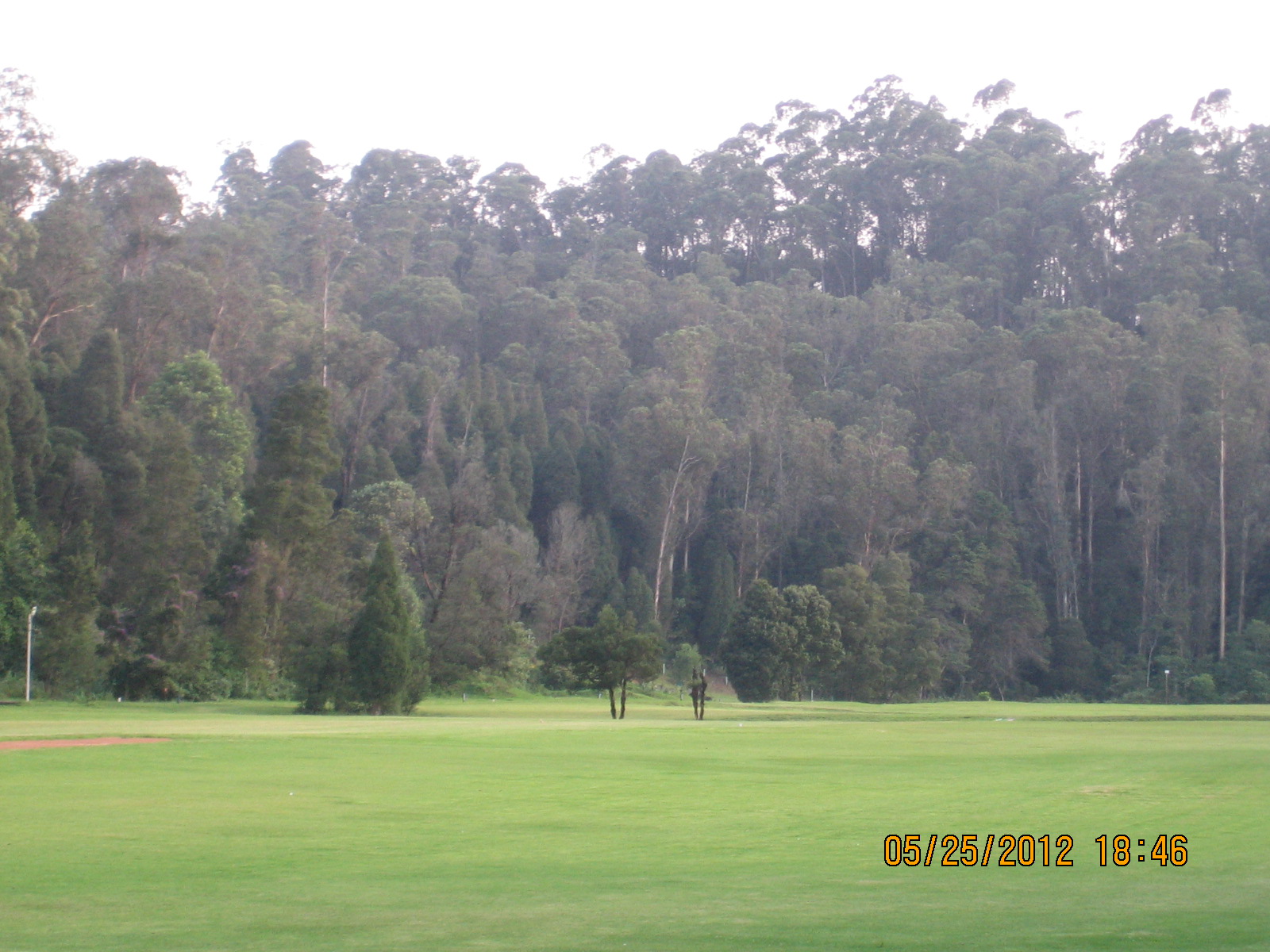
Spent a lovely week in Coonoor last month. It’s without a doubt our favourite hill station. The weather is just right -  never too cold - and it has little attraction for tourists other than the Sim’s Park for it to get over-crowded. We love  the Wellington Gymkhana.  Though the food , over the years, has become slightly indifferent and the service a bit variable – the view from the sit-out of the cottages , of the tea gardens and the golf course, makes up for everything.  For us it’s usually five days of doing nothing  - not even  Golf - except for long walks  and the mandatory visits to Bakers’ Junction in the evenings to pick up bread, locally made cheese (Gray’s Hill and Acres Wild) and Pomelo Marmalade.


The problem with Calcutta is the lack of getaways. It’s one more reason to miss Mumbai – with Goa just a handshake away or even Khandala, Pune and Mahabaleshwar at striking distance Delhi, Bangalore, Chennai all have more than their  fair share of places for short breaks.  It’s a pity though because very few states are blessed with such range of vista as West Bengal. Mamata Banerjee points out, for once got it correct (given her fantastic sense of Geography.  Remember her classic “Bengal is the gateway to the countries of the North East” and “Bangladesh, which is the border of Pakistan”? ).  West Bengal is endowed with natural bounty – from the Himalayas at one end to the Bay of Bengal on the other, traversing through forests, rivers and many heritage sites. But, the woeful infrastructure doesn’t offer many options for a decent holiday.  Especially after Darjeeling has gone out of bounds.,  a Bengali  traveling to the Nilgiris to enjoy the tea gardens may  not  be as New Castlenian (if one were to coin a term) as it may sound.  Today, Bangkok, Phuket and Langkawi (and even Kunming in China) have emerged as popular holiday destinations for Bengalis and Calcuttans thanks to ‘low-cost’ airlines and budget hotels.


On returning from Coonoor what hit me hard is not the steam-bath weather of Calcutta – but the cruel credit card bills. Though, we had the luxury of staying at the Club (which was a saving grace) – what dealt the killer blows are the air-fares and taxi bills.  Which begs the question – why can’t we holiday in India without having to go broke? Or is it that we have become too snooty and spoilt for our own good?

That’s probably being a little unfair. Basically, I don’t think we have got our act right as far as cost equations  go in the tourism and hospitality business  or  for that matter even in airlines ( perhaps,  Indigo  is the only exception).  So, what’s ‘affordable’ is really lousy quality and what is passed off as ‘budget’ is sometimes as steep as a good 4 or 5 star in Thailand or Malaysia.  Even neighbourly Nepal offers far greater value for money for an ordinary tourist. So, no wonder more and more Indians are opting to holiday abroad than at home.

There are exceptions, of course. Home-stays in Kerala have caught on. And, the latest Kerala Tourism ads promote it as a destination for all seasons and to suit all pocket sizes. Goa has something to offer at every price-point from the shoe string to the ultra luxury.  Rajasthan too operates across a range – from the bag-packers to the super rich.  But, that’s about it. In the rest of the country the infrastructure, particularly at the lower end of the spectrum, is worse than pathetic.


Yet, as the poet wrote, we travel the world but overlook the beauty at our own back-yard. As a Bengali, I am ashamed to admit that I have never been to the Sunderbans – partly because till recently no infrastructure worth its name existed there.  I am told now a few Eco Resorts have come up – which aren’t too bad.  Monsoons are certainly not the time to go there. But, I hope to make amends this winter and wade through a few pages of Amitav Ghosh’ The Hungry Tide.