Showing posts with label goa. Show all posts

Saturday, June 09, 2012

Coonoor


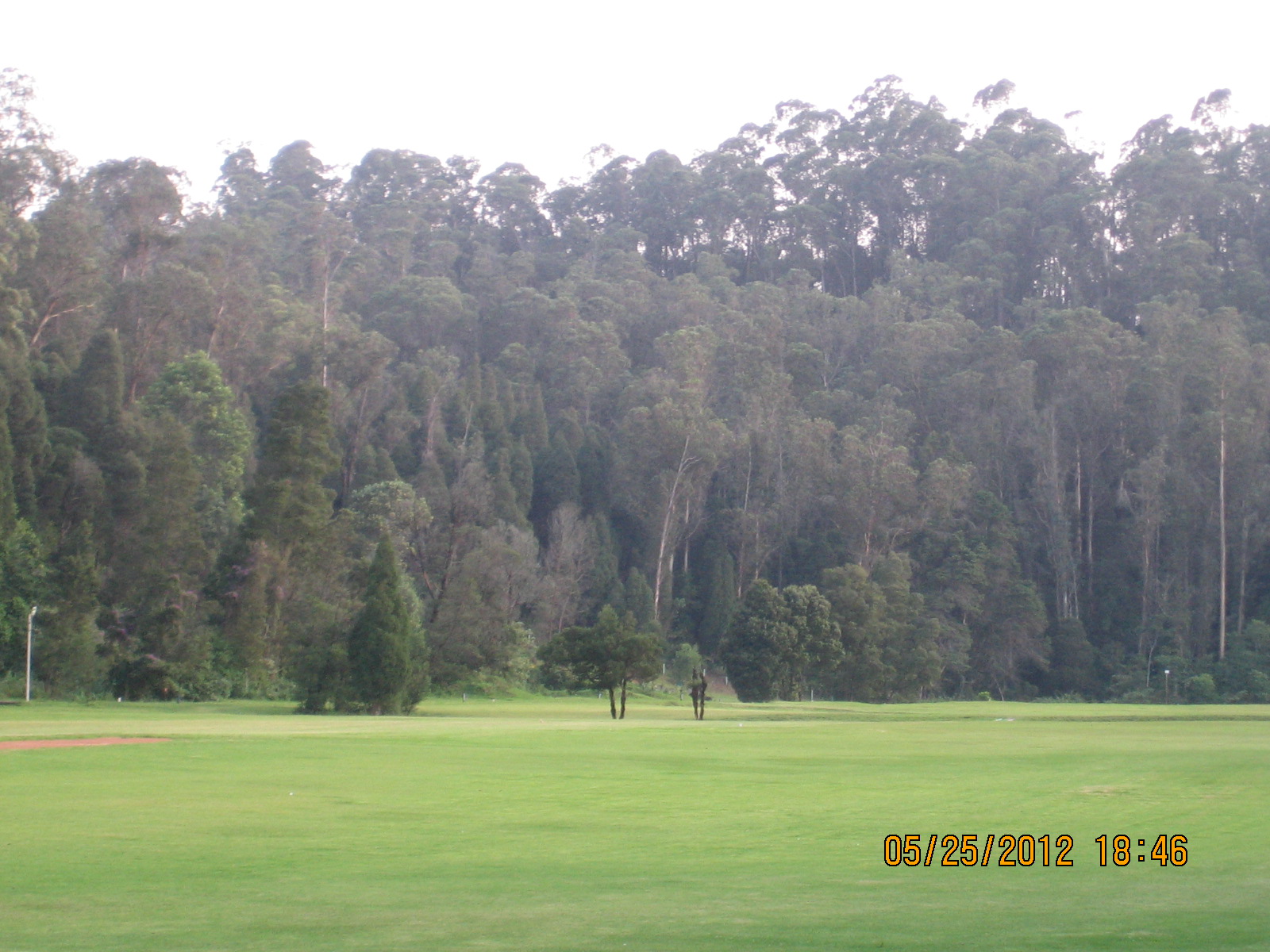
Spent a lovely week in Coonoor last month. It’s without a doubt our favourite hill station. The weather is just right -  never too cold - and it has little attraction for tourists other than the Sim’s Park for it to get over-crowded. We love  the Wellington Gymkhana.  Though the food , over the years, has become slightly indifferent and the service a bit variable – the view from the sit-out of the cottages , of the tea gardens and the golf course, makes up for everything.  For us it’s usually five days of doing nothing  - not even  Golf - except for long walks  and the mandatory visits to Bakers’ Junction in the evenings to pick up bread, locally made cheese (Gray’s Hill and Acres Wild) and Pomelo Marmalade.


The problem with Calcutta is the lack of getaways. It’s one more reason to miss Mumbai – with Goa just a handshake away or even Khandala, Pune and Mahabaleshwar at striking distance Delhi, Bangalore, Chennai all have more than their  fair share of places for short breaks.  It’s a pity though because very few states are blessed with such range of vista as West Bengal. Mamata Banerjee points out, for once got it correct (given her fantastic sense of Geography.  Remember her classic “Bengal is the gateway to the countries of the North East” and “Bangladesh, which is the border of Pakistan”? ).  West Bengal is endowed with natural bounty – from the Himalayas at one end to the Bay of Bengal on the other, traversing through forests, rivers and many heritage sites. But, the woeful infrastructure doesn’t offer many options for a decent holiday.  Especially after Darjeeling has gone out of bounds.,  a Bengali  traveling to the Nilgiris to enjoy the tea gardens may  not  be as New Castlenian (if one were to coin a term) as it may sound.  Today, Bangkok, Phuket and Langkawi (and even Kunming in China) have emerged as popular holiday destinations for Bengalis and Calcuttans thanks to ‘low-cost’ airlines and budget hotels.


On returning from Coonoor what hit me hard is not the steam-bath weather of Calcutta – but the cruel credit card bills. Though, we had the luxury of staying at the Club (which was a saving grace) – what dealt the killer blows are the air-fares and taxi bills.  Which begs the question – why can’t we holiday in India without having to go broke? Or is it that we have become too snooty and spoilt for our own good?

That’s probably being a little unfair. Basically, I don’t think we have got our act right as far as cost equations  go in the tourism and hospitality business  or  for that matter even in airlines ( perhaps,  Indigo  is the only exception).  So, what’s ‘affordable’ is really lousy quality and what is passed off as ‘budget’ is sometimes as steep as a good 4 or 5 star in Thailand or Malaysia.  Even neighbourly Nepal offers far greater value for money for an ordinary tourist. So, no wonder more and more Indians are opting to holiday abroad than at home.

There are exceptions, of course. Home-stays in Kerala have caught on. And, the latest Kerala Tourism ads promote it as a destination for all seasons and to suit all pocket sizes. Goa has something to offer at every price-point from the shoe string to the ultra luxury.  Rajasthan too operates across a range – from the bag-packers to the super rich.  But, that’s about it. In the rest of the country the infrastructure, particularly at the lower end of the spectrum, is worse than pathetic.


Yet, as the poet wrote, we travel the world but overlook the beauty at our own back-yard. As a Bengali, I am ashamed to admit that I have never been to the Sunderbans – partly because till recently no infrastructure worth its name existed there.  I am told now a few Eco Resorts have come up – which aren’t too bad.  Monsoons are certainly not the time to go there. But, I hope to make amends this winter and wade through a few pages of Amitav Ghosh’ The Hungry Tide. 

Thursday, August 25, 2011

the corporate gigolos


Neil Bose – my friend in college, a bright student otherwise – failed to get a first class in his Economics Honours. Calcutta University, of course, applied standards of evaluation that could easily make an Oxford Don stumble. Disheartened and disgusted with our examination system, Neil threatened to write a guide-book on “How to get a First Class – written by a ‘Second Class’ student”.

It’s an old adage – “those who can do, and those who can’t teach”. A great teacher need not necessarily have been a brilliant student – though, there is nothing to prevent it from being the other way round. The same true not just in academics but also in other fields of life – especially sports or music. Some of the best sports coaches - weren’t the champions of the game. Very often – in their own careers they fell short of reaching the top – despite being hugely talented. Chances are – they didn’t get the lucky breaks – but more likely they weren’t temperamentally cut-out for making it big. It is from their failures though they learnt the rules and tricks of success – which they could put to use good use in training others.

Old Boys' Badge Value

Executive Coaching – popular abroad, especially in the US, for quite some time - is catching on India like so many other western fads. Many former senior colleagues connecting on Linked-In and Facebook mention “Executive Coach” as their current occupation. Most of these are glorified announcements of “disguised unemployment”, but still some, I am told, have made a successful practice of it – adding handsomely to the generous superannuation package endowed in their favour by past employers. They largely rely on word of mouth recommendations of friends – much the same way they land on company board memberships through ‘old boys’ network.

Like external directors how much value they really add – is questionable. Only a few amongst them have actually undergone any kind of formal training or have an accreditation for coaching. Many don’t even have a HR or Organisation Behaviour (OB) background. A coach is supposed to operate somewhere between a mentor and a therapist. It requires certain skill sets and competencies like any other profession. These people generally don’t have any such specialization and fly by the seat of their pants. But, still they do have takers.

First, there is a badge value. It’s fashionable to have an executive coach these days – if you are seen to be a high-flyer within the organization. It’s almost like the craze among the rich, famous, yuppies and wannabes for personal trainers at their private gyms. A friend in the HR circuit educated me, it’s a ‘win-win’ formula. Earlier, companies would send their ‘hi-po’s for professional development or advanced management programmes to top management schools. Now, if you are of an employee of any value – it is difficult for an organization to spare you even for a couple of weeks to attend courses. And, even if they do – the incumbent is scared if he or she’d have a job upon return. For this – appointing a coach is a convenient solution. It probably costs as much or less than an external programme and the coachee doesn’t have to take time off from his or her job. Following a round of coaching and mentoring, there are usually some visible behavioural changes, which get reflected in 360 degree appraisals, at least in the short-term, that makes everyone – the boss, the sub-ordinate, his reports and peers – happy, setting in motion a self-fulfilling virtuous cycle.

a susegad after-life

If you have been wondering – where I am leading you to with all this circumlocution, it’s about alternative vocation options, something that I have been pondering over for a long time. There are only a few people I know, who have been able to make a successful career in mid-life or later. It’s not easy to re-invent one-self. Re-skilling is one of the most difficult tasks – though we may not always realize it. Displaced populations – land losers especially – realize it at the hard way. But, this is the “Age of Unreason” – Charles Handy, the Oil Company Executive turned management Guru and Corporate Philosopher had written about. It’s a modern day challenge to prepare for that day of reckoning – otherwise, we are left holding an “Empty Rain-Coat” – to use another Handy title – shorn of our corporate trappings.

Of course, a susegad (socegado) life in Goa would be what the doctor ordered for me. But, even my young daughter refuses to take me seriously when I talk about it. A moderate climate hill-station like Coonoor would have been good too. But, these places are fast getting crowded and running out of basic necessities like water. The bigger question, however, is having neither a hefty retirement corpus nor any other source of annuity - how will I sustain myself. The cost of medical treatment itself is frightening.

Using the same convoluted Bosean logic ( Neil, no relation of the now famous D K Bose), I think - I would have made a decent Corporate Coach (among so many other things) if only I had taken the pains to archive and chronicle all my mistakes and failures in corporate life. Coming to think of it – I have learnt more from bad bosses – some of them, of the Hari Sadu variety - than the ones for whom I loved to work. But, alas I don’t have either the network of contacts or the gravitas. A friend suggested that, a way to overcome the latter could be by getting into tele-coaching – where the coachee would not be able to see me. It seems – the client opens up more when he is not sitting under the glare of the coach or mentor in a chair or a couch – but instead relaxing on his potty or lying in bed with just undies on - scratching his front or back as a thought stimulator. Somehow, it sounds like being a corporate phone gigolo and doesn’t quite appeal to my finer sensibilities.

So my quest – for a corporate ‘after-life” continues. Till then, my downhill slide from one soul breaking job to another is ordained to continue – soaps and shampoos to sanitary napkins and diapers; (news)paper to concrete, as it were.

Any suggestions are most welcome !!

Sunday, May 09, 2010

The Loss of Innocence

This afternoon, I finally ended my extended affair with Fusun. It was an all-consuming experience lasting over several weeks. At the end of it, I am left drained and exhausted with satiety.

For those of you – who haven’t yet read Orhan Pamuk’s “The Museum of Innocence” (click here to read excerpts)– she is the heroine of the book and the subject of a tragic and obsessive love of the narrator, Kemal Basmaci – a rich Istanbulli playboy.

I discovered Pamuk a few years back with his – “Snow” – another riveting and haunting novel - which, I think, has been his most powerful book before this. As I don’t much care for historical novels – therefore, “My Name is Red”, for which he got the Nobel, didn’t quite appeal to me – though by all accounts it’s a masterpiece.

I think it was Kingsley Amis who said, writing is the ultimate form of telepathy. Through books thoughts are transmitted over time and space – and the author enters the reader’s mind. The Museum of Innocence is that kind of a book. It is almost maddening in its minutiae. He does not just invade your head but possesses it. Time and again thru’ its 532 pages, I have wondered if he’ll be able to pull it off – only to be surprised at being drawn inexorably to the next chapter as if in an hypnotic trance.

It is tantalizing in its Hemingwayesque simplicity of narration. There is a hallucinatory quality about the love story of Fusun and Kemal, painted against a rich backdrop of upper-class Istanbul society in the cusp of modernity (".... poised uncomfortably between modern and traditional attitudes to love and sex, with eros half out of his cage, but honour and shame still coordinating the perception of private conduct" as one critic puts it so beautifully. Inncocence, obviously, refers to virginity: "Kemal is happily engaged to Sibel .......who as he puts it – 'given me her virginity',...... and before long Fusun too has 'deliberately elected to give her virginity'.... and she vows not to sleep with another man - the deflowering is ominously juxtaposed with images of the Feast of the Sacrifice, with lambs being butchered on every corner of Istanbul" - James Lasdun, in The Guardian)


For me, the description of Istanbul in 70s and early 80s is not very unlike the Calcutta we grew up in - give or take a few years either way. Fusun’s family gathered around the television is so reminiscent of the good ol’ Doordarshan days. The art film scene of Istanbul could easily be compared with vintage Tollygunj of the same period. At some point, Kemal makes a remark : I had forgotten what I had forgotten (or something close to that effect). I was overcome by a similar feeling a few months back, when – following my Mother’s death – I was in Calcutta for one of the longest period of time in recent years. Chatting with visitors – friends and relatives – who were dropping by brought back a stream of memories (of people, objects and places) that I thought had had long ago slipped away from my cumulative consciousness.

Great literature – they say – teach us something about ourselves. Reading ‘The Museum of Innocence’ we recognize the shades of Kemal (or for that matter Sibel or Fusun ) in us. And like him, we too have nuggets of trivia and trinkets stacked in the attics of our brain – our own little Museums of Innocence.

"I would hate for it to be called a love story," said Pamuk in an interview. "The book is an exploration of how life treats us, how people, circumstances and geography — the chemistry of streets in Istanbul, for instance — change, and we mortals are left helpless as things go beyond our control."


Going by the graphic story-telling, it would be natural to surmise that, at least in parts, it is an autobiographical novel. Answering this - by now what has become a routine question for him at all Book Reading Sessions, Pamuk teases : “ Kemal is not Orhan, but then I can’t convince you that Orhan is not Kemal... (tho') the only similarity between them is that both "were having a good life in a poor country"( so true for the India you and I live in too). The challenge for a writer, we know, is to keep the reader guessing as to what is fiction, what is reality. That is the master novelist for you.


I am sure that, thanks to the publicity he got for the new woman in his life, Kiran Desai - there age difference - 57 & 38 - almost the same as that of Kemal and Fusun (click here). ‘The Museum of Innocence’ will out-sell all his previous books in India. Probably realizing that (or the influence of his girl friend) , Pamuk throws a generous smattering of India in to his book – such as the Tagore Museum in Calcutta or the Halal restaurant in Delhi. But, one thing’s for sure – after this Turkey will feature high on my list of places I want to travel to (just as, I belive, Goa has suddenly become popular with Turkish tourists after Orhan and Kiran have dropped anchor there to work on their respective new projects). May be I’ll go there in time for the opening of the Pamuk Museum

Read my takes on Amitava Ghosh' - The Sea of Poppies at "In bed with Ghosh" and "Sailing with Priyanka on the Ibis". Also Kunal Basu's - The Japanese Wife at Lady Canning Lives in Japan

muk Museum.

Thursday, May 01, 2008

I love Bebo


A Nawab I am certainly not and I have a pot-belly that neatly curls up into six-folds (rather than the now famous 6 ‘Khan-Packs’ ) - yet, I too have a Bebo in my life – not in Bandra but in sultry Goa. As you drive up from Colva towards Martin’s – Bebo’s house comes on the left. Bebo acts in plays – so, is a local celebrity. You have to only ask at any roadside shop and they’ll at once direct you there. Tho’ not many in Mumbai have heard of Bebo – obsessed as they are with Bollywood’s Choti Begum-saheba in waiting and other such sprigly things – my Bebo’s fame too spreads well beyond the Goan shores. Many a lustful, middle-aged marauder like your faithful blogger – in Delhi, Dubai or Dallas begin to salivate at the mere mention of Bebo’s name. Celebrated non-resident Goans and immigrants who have acquired the status of honorary Goans, visiting apprentice Goans of my ilk, Goan politicians of all hues including successive Chief Ministers, local aristocrats and socialites all adorn Bebo’s eclectic fan-club.

Alas !! Bebo is a man – dark, greasy, podgy and reeking of Feni anytime of the day – but he makes the most sinfully divine Goan chorizos in the world. The tenderest of Salcette Pork is marinated in home-made vinegar and purest Kashmiri chilies – stuffed in hog-intestines, tied-up in small knots and hung out to dry on a clothes line in his courtyard. Soaking in the scalding seaside sun and salt from the air, they acquire a red hue and piquant taste that can turn on any man by setting on fire the most uninitiated palate. Bebo’s sausages are not like the commercially produced ones - long with chunky meat inside - that you get in Bombay cold-storages. His are more cocktail size with morsels that you can nibble on – sucking out the last drop of juice from the meat. They don’t have the sharp tang of acetic acid that comes out of synthetic vinegar and the Kashmiri chilies give them a lighter ruddy colour and a subtler flavour that tantalizes the taste-buds without damaging the orifices at either end of the human anatomy.

Bebo sells them not by the dozen but strings of fifty or a hundred ( not as much as you might think – because they are much smaller in size ) at a price less than third of the branded variety. And, if he really likes you – he would ask his wife to pack some of his secret Rechado masala in a bottle to take home for just the cost of the red-chilies (which come at Rs 150 a kg in the market, by the way). So next time – you are in Goa and in a mood to stray a little, give Bebo a call (9822584195) and drop by at his humble hut in Betalbatim to pick up your parcel. I promise you won’t be disappointed – or I would buy the sausages back from you ( cooked or uncooked ) – and that’s a Ghose lot of guarantee.